National Puppy Day

Today is National Puppy Day!

National Puppy Day is observed each year on March 23rd, National Puppy Day celebrates the unconditional love and affection puppies bring to our lives.  Their cuddles and wiggles make us smile and without a doubt, there are squeals of delight when there are puppies around!

The day also brings awareness to the need for care of and homes for orphaned pups as well as to educate people about the horrors of puppy mills across the country. Puppies are a big responsibility. Be sure to consider everything involved and adopt from a shelter. The puppies there need love and a home just as much as any other and they grow into loyal pets, too!

According to the ASPCA, approximately 3.3 million dogs enter shelters every year. Some of these dogs come with litters of puppies. If you’re seeking a puppy to start your furry family, check the shelters first. When these abandoned and abused animals find their way to a shelter, each one needs a forever home and their potential is limitless. (National Day Calander) https://nationaldaycalendar.com/national-puppy-day-march-23/

All Dog Breeds In The World (A to Z)

101 Facts About Dogs

Famous Dogs in History
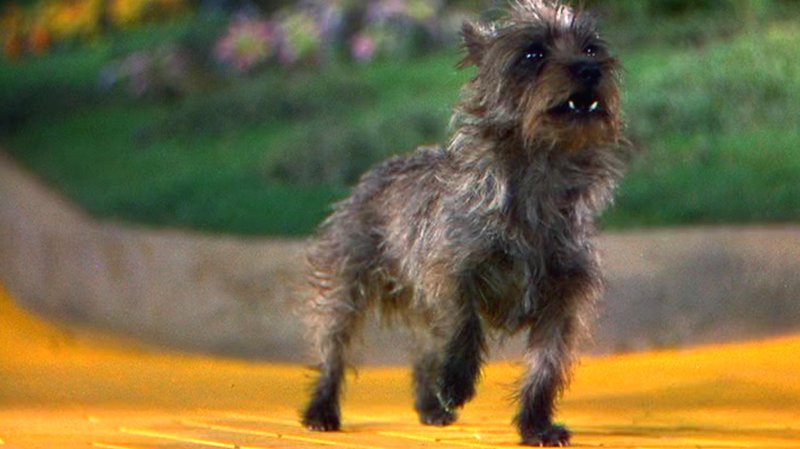
Toto, the Cairn Terrier

Many of us know the line from the beloved film, The Wizard of Oz, when Dorothy laments to her canine friend, “Toto, I’ve a feeling we’re not in Kansas anymore.” But what others may not know is the story behind this famous doggie actress, even though this is easily one of the most famous dogs in history. Toto, whose real name was Terry, was abandoned as a puppy. Luckily, for her, however, she was adopted by German immigrant, Carl Spitz, who was the unofficial dog-trainer of Hollywood.

With his help, she was trained to become one of the most coveted canine actresses of her generation, starring alongside some of the time’s biggest stars, including Judy Garland. Before her close up in The Wizard of Oz, Terry was already well-versed in the ways of the silver screen. By the end of her career, she had been casted in 17 films, living to be 11-years old.

How Terry the Terrier Became Toto. https://www.npr.org/2014/08/25/343145247/from-carpet-wetter-to-film-icon-how-terry-the-terrier-became-toto

5 Little-Known Facts About The Wizard of Oz https://www.dailymotion.com/us/topic/x45gf

Rin Tin Tin, the German Shepherd
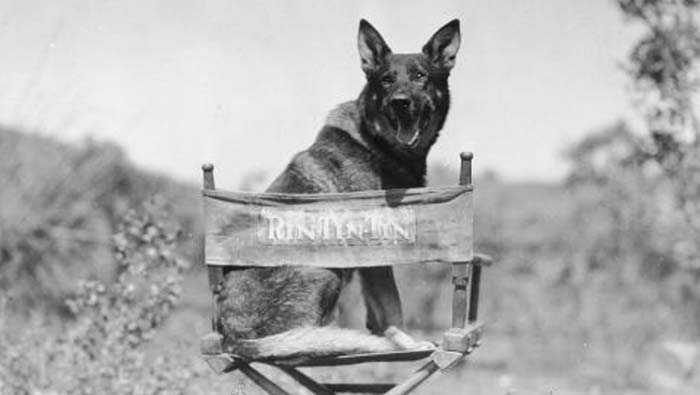
Perhaps not only one of the most famous dogs in history but also the most famous of his breed, Rin Tin Tin was found in war-ravaged France during WWI and adopted by an American soldier named Lee Duncan. The rest of Rinty’s – an affectionate nickname he would come to be called – litter, sadly, didn’t make it. In his new life in Los Angeles, Rin Tin Tin was catapulted to stardom when he caught the eye of a filmmaker at a dog show where he reportedly jumped 12-feet high.

Shortly thereafter, Rin Tin Tin came to star in nearly 30 films, many of which were written specifically for him. Before his sudden death – which left his owner devastated – Rinty was the unofficial doggie mascot of Warner Bros. Studios, effectively saving the small studio from bankruptcy.

The Adventures of Rin Tin Tin Season 1 (32 videos)

The Adventures of Rin Tin Tin Season 2 (19 videos)

Lassie, the Rough Collie

This long-coated, unique dog was of the most popular canine movie stars of the ‘40’s and ‘50’s, solidifying his name as one of the most famous dogs in history. Of course, there have been many other canine characters – Shiloh, Wishbone, Benji – but none endure quite like Lassie. Even up to the recent 40 years, Lassie has been re-envisioned by a  ‘90’s TV Series and 2005 full-length film being made about the famous Collie.

Although Lassie’s character is female, the part has always been given to male Collies. The original was a Rough Collie named Pal. Since Pal’s death in 1958, all Lassie roles have been held by pups of his bloodline. And it’s quite the lucrative family business to go into, as reports show Pal made twice what his human co-star, Elizabeth Taylor, made in Lassie Come Home.

Lassie – Season 1 – “Jeff’s Collie” (26 Videos)

Lassie – Season 2 – “Jeff’s Collie” (38 videos)

Lassie – Season 3 – “Jeff’s Collie”( 37videos)

LASSIE, THE PAINTED HILLS (1951)

To learn more about Famous dogs in movies, please click the link.  https://topdogtips.com/most-famous-dogs-in-history/

Famous Cartoon Dogs

Pluto

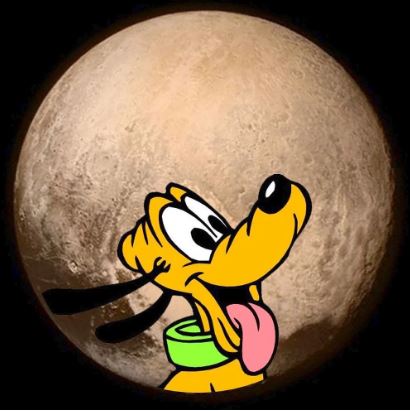
Pluto, also called Pluto the Pup, is a cartoon dog created in 1930 at Walt Disney Productions. He is a yellow-orange color, medium-sized, short-haired dog with black ears. Unlike most Disney characters, Pluto is not anthropomorphic beyond some characteristics such as facial expression.

He is Mickey Mouse’s pet. Officially a mixed-breed dog, he made his debut as a bloodhound in the Mickey Mouse cartoon The Chain Gang.

Black and white version, The chain Gang

Color version, The chain Gang

The Best Pluto Cartoons Full Episodes – 2 Hours

Scooby Doo

Scoobert Scooby-Doo is the eponymous character and protagonist of the animated television franchise of the same name created in 1969 by the American animation company Hanna-Barbera. He is a male Great Dane and lifelong companion of amateur detective Shaggy Rogers, with whom he shares many personality traits. He features a mix of both canine and human behaviors (reminiscent of other funny animals in Hanna-Barbera’s series), and is treated by his friends more or less as an equal. He speaks in a famous, and much parodied, dog-like voice. His catchphrase is “Scooby-Dooby-Doo!”

SCOOBY DOO WHERE ARE YOU!
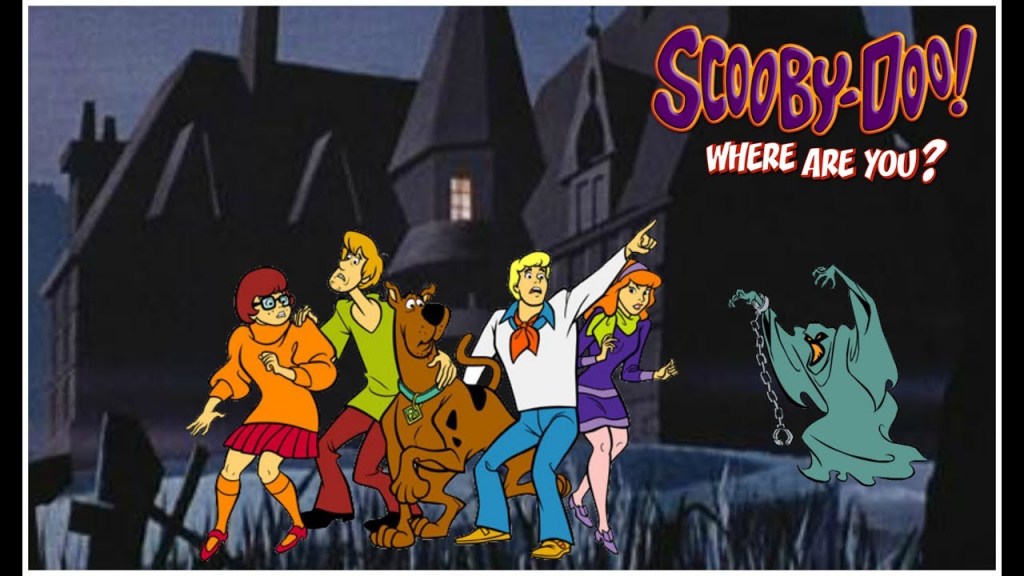
SCOOBY DOO WHERE ARE YOU! 1969 PLAYLIST (95 Videos)

The Pound Puppies

The Pound Puppies is an animated television special, produced by Hanna-Barbera Productions, based on the popular toy line from Tonka, which aired in syndication on October 26, 1985, paired with Star Fairies. Characters in the special included the Fonzie-styled leader Cooler (voiced by Dan Gilvezan), the cheerleader Bright Eyes (voiced by Adrienne Alexander), and a dog with a very nasal like New York accent known only as “The Nose” (voiced by Joanne Worley), and the goofy inventor aptly named Howler (voiced by Frank Welker), who can only howl.

The Pound Puppies (26 Videos)

Humans being Dogs

Songs about Dogs

I hope this post has helped you Smile! If you enjoyed this post, please feel free to; Like, Comment, Share, and Subsrcibe! I look forward to seeing you again real soon!

Today Pluto the Planet was Discovered!

Pluto Day

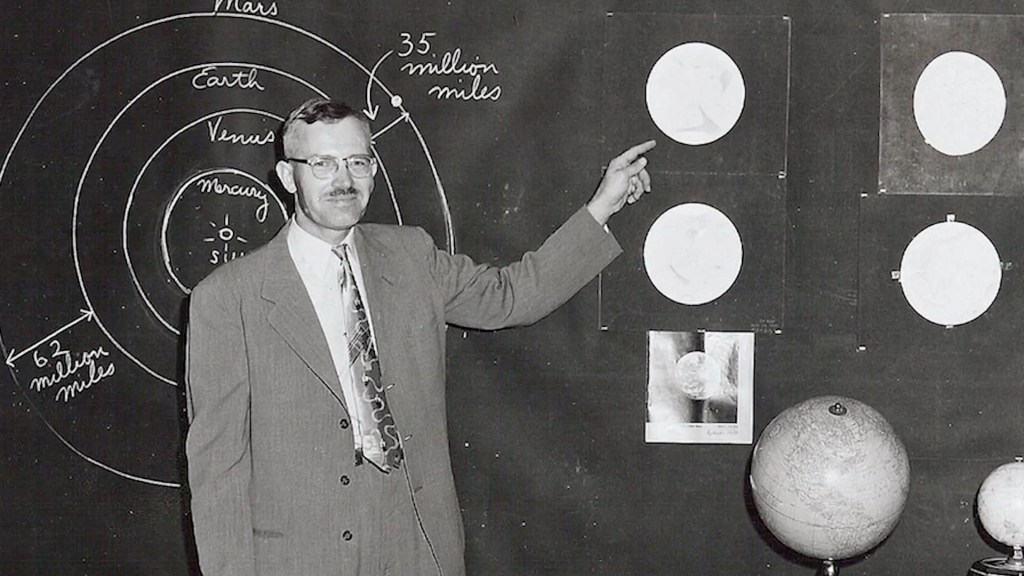
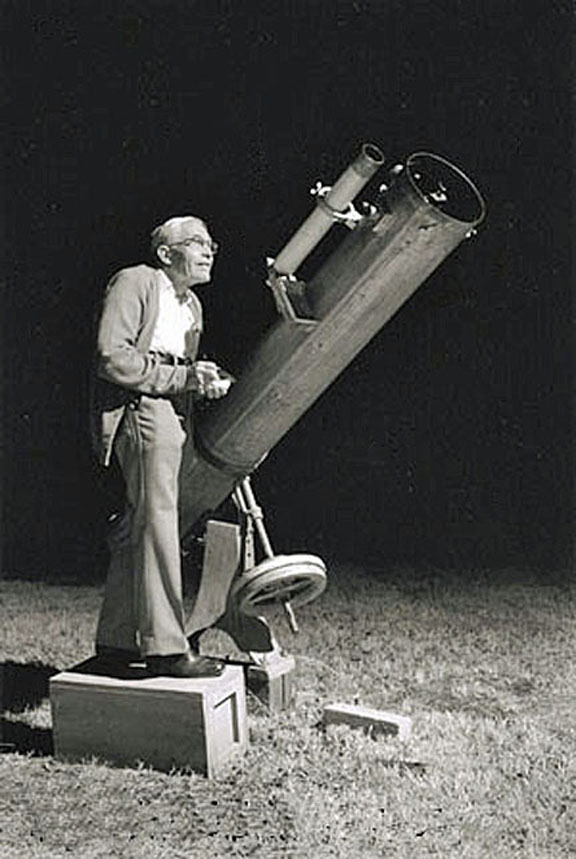
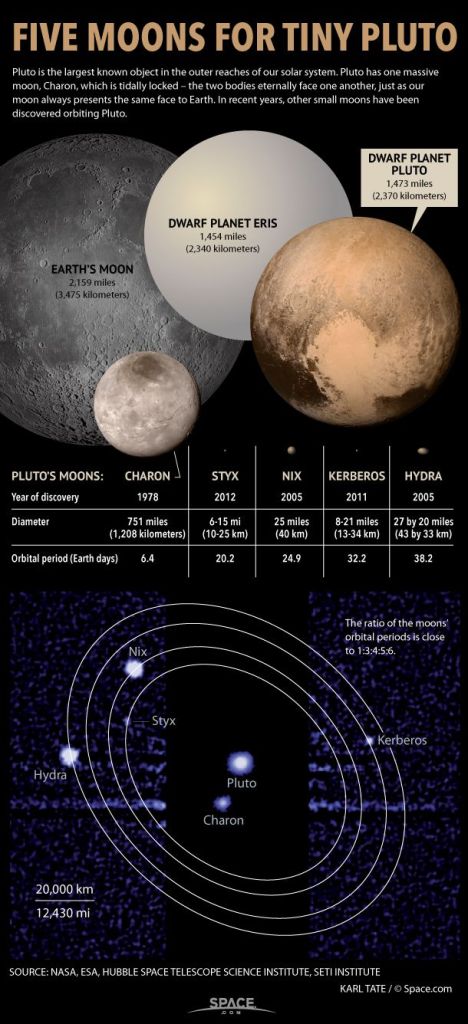
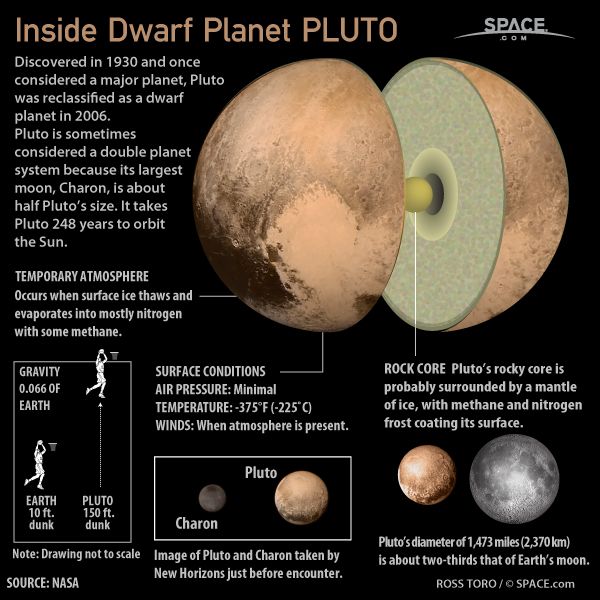
On this day February 18th in 1930, The planet Pluto was Discovered. US astronomer Clyde Tombaugh discovered Pluto while working at at Lowell Observatory in Arizona. Tombaugh used a one-of-a-kind telescope, nicknamed the “T4” in this planet discovery. Read on to learn more about this Great Astronomer and the Now categorized Dwarf Planet Pluto.

Clyde Tombaugh

Facts about Clyde Tombaugh

In 1928, the amateur astronomer was offered a job at Lowell Observatory in Arizona, where he discovered Pluto.

To learn more about Lowell Observatory click this link https://lowell.edu/

Pluto was discovered in 1930 by Clyde Tombaugh.

In 1934, he married Patricia Edson. They had two children, Annette and Alden.

 He earned his bachelor’s and master’s degree in astronomy from the University of Kansas, working at the observatory during the summers.

Aerial, Jayhawk Blvd., view to the southwest, clockwise from lower-left: Spooner Hall, Fraser Hall, Dyche Hall

To Learn more about the University of Kansas, Click this link https://ku.edu/

Tombaugh remained at Lowell Observatory until the advent of World War II, when he was called into service teaching navigation to the U.S. Navy at Arizona State College.

To learn more about Arizona State College, click the link. https://www.asu.edu/

 After the war concluded, he worked at the ballistics research laboratory at White Sands Missile Range in New Mexico.

“A one-of-a-kind telescope, nicknamed the “T4,” that hasn’t been used since the 1960s will soon be on permanent display at the White Sands Missile Range Museum Missile Park.

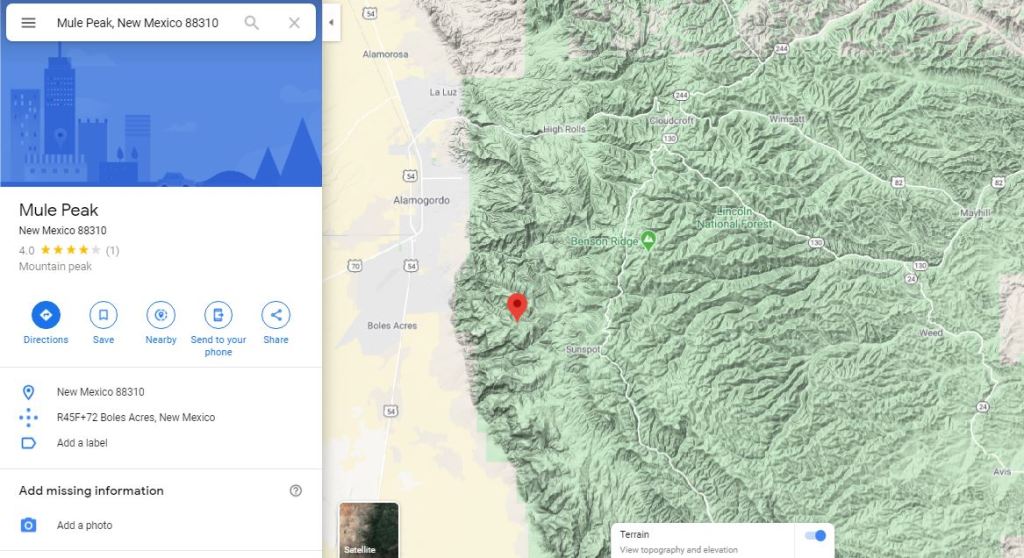
The telescope’s New Mexico journey begins in 1948 when a Telescope IV, commonly referred to as T-4, was shipped from the Ballistic Research Laboratory at Aberdeen Proving Grounds, Maryland, to Mule Peak located at about 7,000 feet and not too far from Alamogordo.

A year earlier, the U.S. Forest Service granted a special-use-permit to White Sands Providing Ground(AKA White Sands Missile Range), authorizing the Army to use Mule Peak for installing experimental instruments, as well as installing shelters and constructing an access road in support of obtaining ballistic measurements on guided missile testing.

The T-4 — one of five newly developed tracking telescopes belonging to astronomer Clyde Tombaugh’s Optical Measurements Branch at WSMR — was used to track most missile tests fired from WSMR, beginning with the V-2 rocket.

The T-1 through T-4 telescopes were built upon air defense anti-aircraft gun mounts. The T-4 telescope uses a 90mm M2 gun mount, with the barrel of the gun still present, although capped. Only one of its kind was ever built.

The three basic telescope designs use different optics to achieve the same result: making distant objects look bigger and brighter than they appear to your eye. See the text for links to animations that show how light passes through the optics of each design.

Refractors have a lens at the front of the tube — it’s the type you’re probably most familiar with. While generally low maintenance, they quickly get expensive as the aperture increases. In refractor lingo, an apochromat offers better optical quality (and is more expensive) than an achromat of the same size. Watch an animation of light passing through a refractor.

Reflectors gather light using a mirror at the rear of the main tube. For a given aperture, these are generally the least expensive type, but you’ll need to adjust the optical alignment every now and then — more often if you bump it around a lot — but that adjustment (called collimation) is straightforward. Watch an animation of light passing through a reflector.

Compound (or catadioptric) telescopes, which use a combination of lenses and mirrors, offer compact tubes and relatively light weight; two popular designs you’ll often see are called Schmidt-Cassegrains and Maksutov-Cassegrains.

The T-4 telescope has not been used since the 1960s, although the crew shelter and other structures were utilized into the 1980s. Bill Godby, archaeologist with the Garrison Cultural Resources Program, spearheaded efforts to have the telescope removed and brought back to WSMR Museum as an outdoor display to be created recognizing Clyde Tombaugh and his efforts. Tombaugh worked at WSMR from 1946 to 1955, and also taught astronomy at New Mexico State University from 1955 until his retirement in 1973. He discovered Pluto in 1930, the first object to be discovered in what would later be identified as the Kuiper belt. In 1980 he was inducted into the International Space Hall of Fame”. (Las Cruces Sun News) https://www.lcsun-news.com/story/news/local/2019/07/06/historic-telescope-finds-new-home-white-sands-missile-range/1664798001/

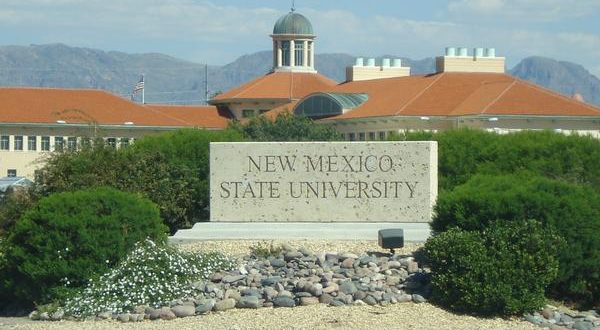
From 1955 until he retired in 1973, he taught at New Mexico State University.

To learn more about New Mexico State University, click the link. https://www.nmsu.edu/

Tombaugh passed away at his home in Las Cruces, N.M., on Jan. 17, 1997.

Las Cruces NM

I lived in Las Cruces NM for 11 years. This is a unique City indeed. It is a Great Vacation place. https://www.lascrucescvb.org/

Pluto was named by Venetia Burney, an 11-year-old girl.


Venetia Burney, aged 11, around the time she named the dwarf planet Pluto Image via J. Weston & Son Photographers, Eastbourne, Brighton in England, UK/ Wikimedia Commons.

Pluto was named by Venetia Burney, an 11-year-old girl. https://earthsky.org/space/this-date-in-science-pluto-gets-its-name

What Is a Planet?

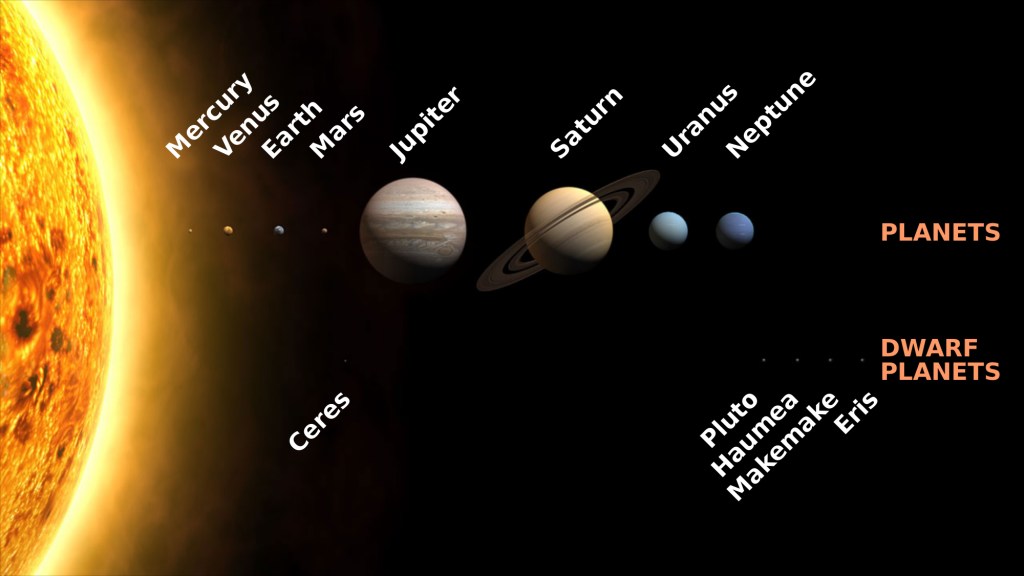
This seemingly simple question doesn’t have a simple answer. Everyone knows that Earth, Mars and Jupiter are planets. But both Pluto and Ceres were once considered planets until new discoveries triggered scientific debate about how to best describe them—a vigorous debate that continues to this day. The most recent definition of a planet was adopted by the International Astronomical Union in 2006.

The New Definition of Planet

The IAU (International Astronomical Union) therefore resolves that planets and other bodies, except satellites, in our Solar System be defined into three distinct categories in the following way:

A planet is a celestial body that (a) is in orbit around the Sun, (b) has sufficient mass for its self-gravity to overcome rigid body forces so that it assumes a hydrostatic equilibrium (nearly round) shape, and (c) has cleared the neighbourhood around its orbit.

A “dwarf planet” is a celestial body that (a) is in orbit around the Sun, (b) has sufficient mass for its self-gravity to overcome rigid body forces so that it assumes a hydrostatic equilibrium (nearly round) shape, (c) has not cleared the neighbourhood around its orbit, and (d) is not a satellite.

All other objects,except satellites, orbiting the Sun shall be referred to collectively as “Small Solar System Bodies”. https://solarsystem.nasa.gov/planets/in-depth/

Just for Fun Videos that have Pluto

I hope you have enjoyed this Post about Pluto. I know that it was quiet Educational. I learned a lot that I hadn’t heard about the Dwarf Planet. If you liked this Post, please