

Easter has a different purpose and meaning to everyone you ask. This meaning and purpose depend upon with whom and where you grew up. Easter can be either, a Religious Holiday or a Spring Festival. For those that grew up in a religious home, easter is a time to celebrate the Resurrection of Jesus Christ. If you grew up in a Pagan Household, Easter is a time to celebrate the Spring Equinox and the many births happening in Nature like Animals, flowers, and Trees. No matter what your religious preference is, we can all agree that Easter is a fun holiday with plenty of Games, outdoor time, Family gathering, and food. This post will dig deep into the Origins, Symbols, Practices, and Overall Fun that has come about throughout the forming of Easter as a holiday. This post will start a series of postings with all kinds of Easter Topics such as History, Easter Party Ideas, Recipes, Activities, and Movies. I hope you enjoy this Easter series as much as we have while compiling it for you.

The Oxford Dictionary Defines Easter as;
noun: Easter; plural noun: Easters
the most important and oldest festival of the Christian Church, celebrating the resurrection of Jesus Christ and held (in the Western Church) between March 21 and April 25, on the first Sunday after the first full moon following the northern spring equinox.
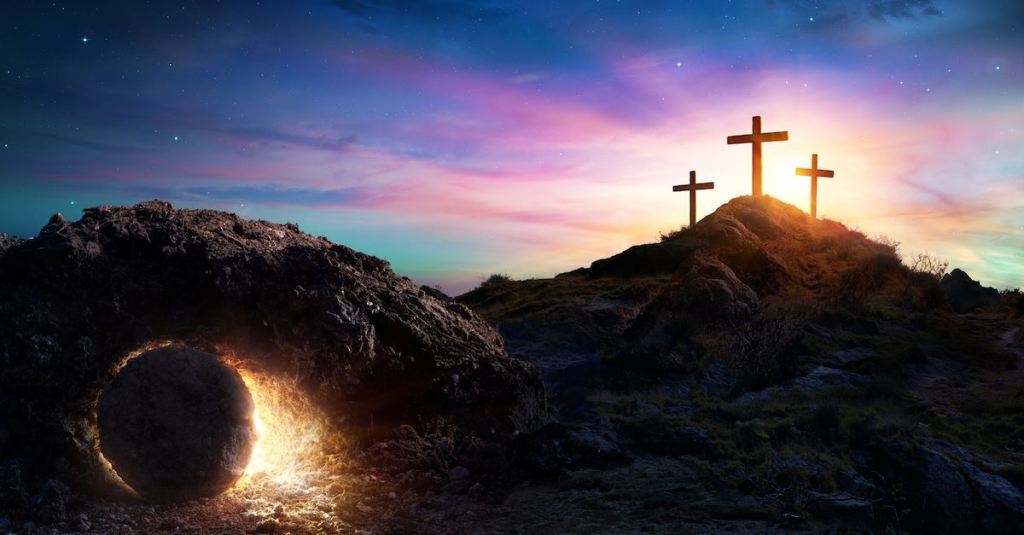
Christianity’s History of Easter
Easter is the celebration of the resurrection of Jesus from the tomb on the third day after his crucifixion. Easter is the fulfilled prophecy of the Messiah who would be persecuted, die for our sins, and rise on the third day (Isaiah 53). Remembering the resurrection of Jesus is a way to renew daily hope that we have victory over sin. According to the New Testament, Easter is three days after the death of Jesus on the cross.
Easter follows a period of fasting called Lent, in which many churches set aside time for repentance and remembrance. Lent begins on Ash Wednesday and ends on Good Friday, the day of Jesus’ crucifixion. The 40 day period was established by Pope Gregory 1 using the 40-day pattern of Israel, Moses, Elijah, and Jesus’ time in the wilderness.
The week leading up to Easter is called The Holy Week, or “Passion Week”, and includes Palm Sunday (the day Jesus entered Jerusalem and was celebrated), Maundy Thursday (the “Last Supper” where Jesus met with his disciples to observe Passover), and Good Friday (when Jesus would be crucified on the cross).
Easter is a very significant date within Christianity and is the foundation of the Christian faith. Jesus, the Son of God, fulfilled prophecy and through his death, has given the gift of eternal life in heaven to those who believe in his death and resurrection.

Eostre: Proper noun: A West Germanic goddess of the spring season.
(paganism) A modern invented pagan festival celebrated either in March or April to welcome the Spring, also called Ostara or Easter.
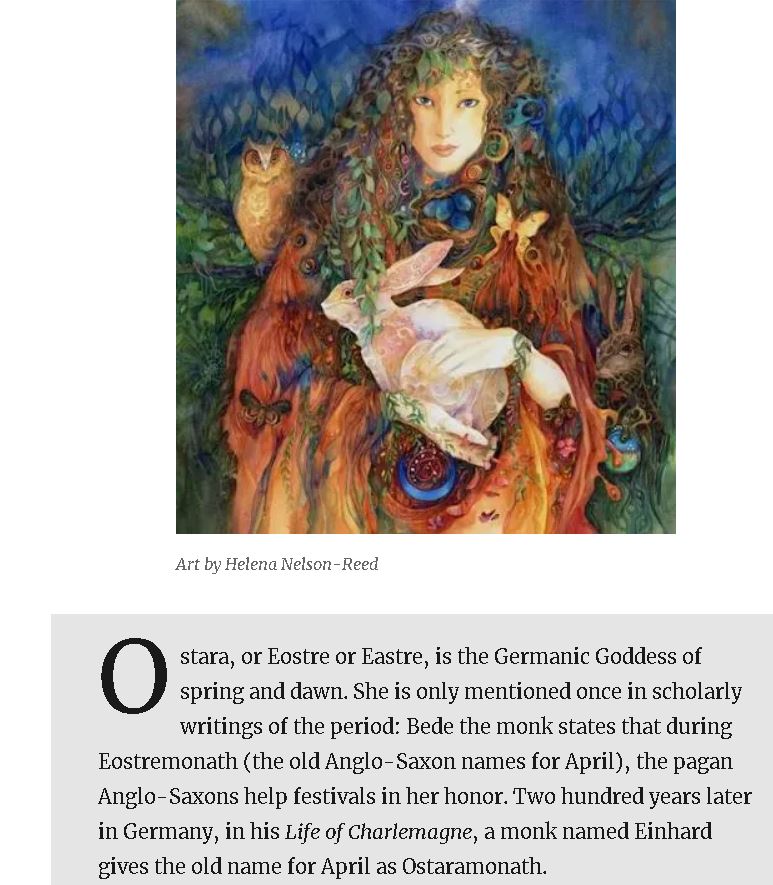

“The name “Eostre” (Old Germanic “Ostara”), is related to that of Eos, the Greek goddess of dawn, and both can be traced back to a Proto-Indo-European goddess of dawn, thousands of years ago.
Her truth, however, is evident every year. She is the first warm spring winds, the birds that return, the trees that bud and curl forth leaves and flowers. She is the awakening earth, rabbits and hares, the eggs that appear after a winter of no light.
Ostara is usually depicted as a young maiden. As Ember Cooke writes, “…old enough to bear children, but not a mother.” She is wreathed in flowers or new greenery, and often dances. She is often joyous, but can just as easily turn suddenly solemn, like the spring weather that can quickly turn to rain. Like Spring itself, she is capricious, innocent, and knowing by turns.
Ostara gives the gift of newness, which is especially important for those of us who are old and cynical in spirit. If you have lost hope over the winter, ask her for a new infusion of it. If you have lost sight of the goal, ask her for fresh eyes to look upon the problem anew”.(Storytelling for everyone)
Source: https://www.northernpaganism.org/shrines/ostara/about.html

Today, we see a secular culture celebrating the spring equinox, whilst religious culture celebrates the resurrection. However, early Christianity made a pragmatic acceptance of ancient pagan practices, most of which we enjoy today at Easter. The general symbolic story of the death of the son (sun) on a cross (the constellation of the Southern Cross) and his rebirth, overcoming the powers of darkness, was a well-worn story in the ancient world.

Origin of Easter: From pagan festivals and Christianity to bunnies and chocolate eggs
“Well, it turns out Easter actually began as a pagan festival celebrating spring in the Northern Hemisphere, long before the advent of Christianity.
“Since pre-historic times, people have celebrated the equinoxes and the solstices as sacred times,” University of Sydney Professor Carole Cusack said.
“The spring equinox is a day where the amount of dark and the amount of daylight is exactly identical, so you can tell that you’re emerging from winter because the daylight and the dark have come back into balance.
“People mapped their whole life according to the patterns of nature.”
Piero della Francesca’s Resurrection painting
Piero della Francesca’s Resurrection (circa 1463) depicting Christ’s triumph over death.(Wikimedia Commons)
Following the advent of Christianity, the Easter period became associated with the resurrection of Christ.
“In the first couple of centuries after Jesus’s life, feast days in the new Christian church were attached to old pagan festivals,” Professor Cusack said.
“Spring festivals with the theme of new life and relief from the cold of winter became connected explicitly to Jesus having conquered death by being resurrected after the crucifixion.”
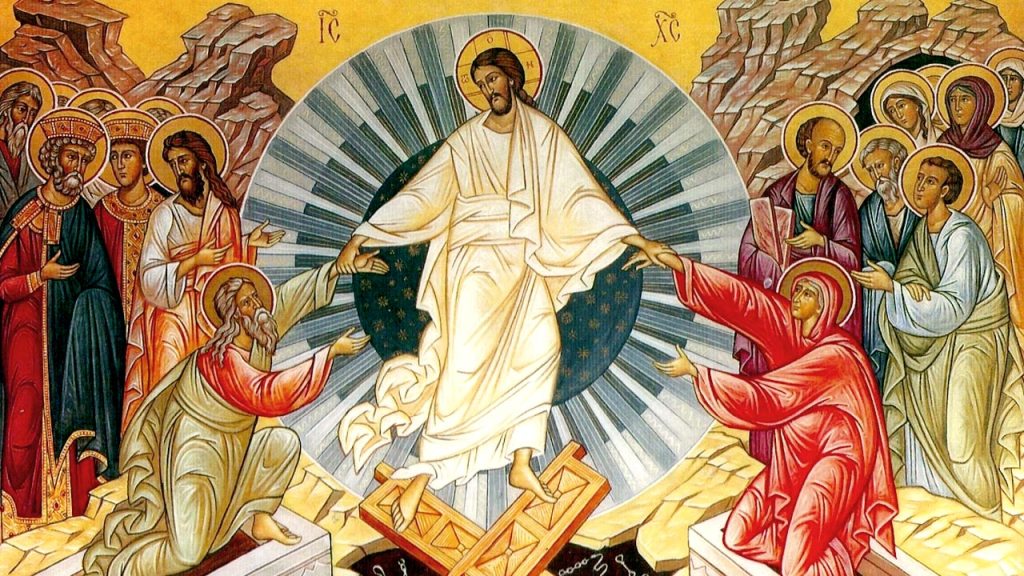
Pascha, Easter and the goddess of spring
In most countries in Europe, the name for Easter is derived from the Jewish festival of Passover.
“So in Greek the feast is called Pascha, in Italian Pasqua, in Danish it is Paaske, and in French it is Paques,” Professor Cusack said.
But in English-speaking countries, and in Germany, Easter takes its name from a pagan goddess from Anglo-Saxon England who was described in a book by the eighth-century English monk Bede.
“Eostre was a goddess of spring or renewal and that’s why her feast is attached to the vernal equinox,” Professor Cusack said.
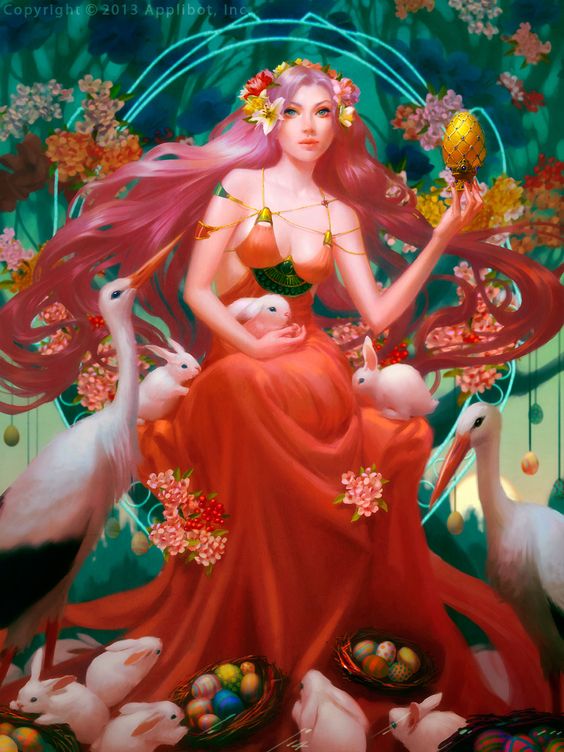
“In Germany, the festival is called Ostern, and the goddess is called Ostara.”

Rabbits and eggs as ancient symbols of new life

Many of the pagan customs associated with the celebration of spring eventually became absorbed within Christianity as symbols of the resurrection of Jesus.
“Eggs, as a symbol of new life, became a common people’s explanation of the resurrection; after the chill of the winter months, nature was coming to life again,” Professor Cusack said.
Traditionally decorated Easter eggs

What do pysanky eggs represent?
The dyes used to decorate pysanky also had a symbolic meaning. Red symbolized the sun, life, joy; yellow stood for wealth and fertility; green was the symbol of Spring and plant life.
Decorating eggs is still a popular folk custom in eastern Europe.
During the Middle Ages, people began decorating eggs and eating them as a treat following mass on Easter Sunday after fasting through Lent.
“This is actually something that still happens(pysanky), especially in eastern European countries like Poland,” Professor Cusack said.
“The custom of decorating hard-boiled eggs or blown eggs is still a very popular folk custom.”
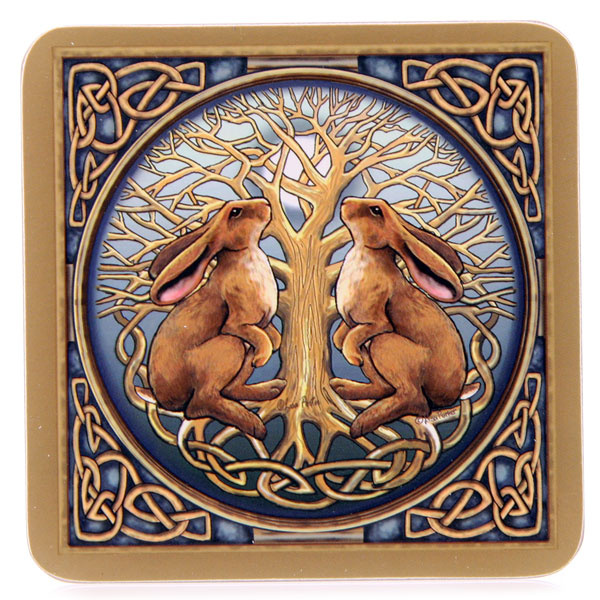
Rabbits and hares are also associated with fertility and were symbols linked to the goddess Eostre.
The first association of the rabbit with Easter, according to Professor Cusack, was a mention of the “Easter hare” in a book by German professor of medicine Georg Franck von Franckenau published in 1722.
“He recalls a folklore that hares would hide the colored eggs that children hunted for, which suggests to us that as early as the 18th century, decorated eggs were hidden in gardens for egg hunts,” Professor Cusack said”.
Commercialization, Confectionery, and Greeting Cards
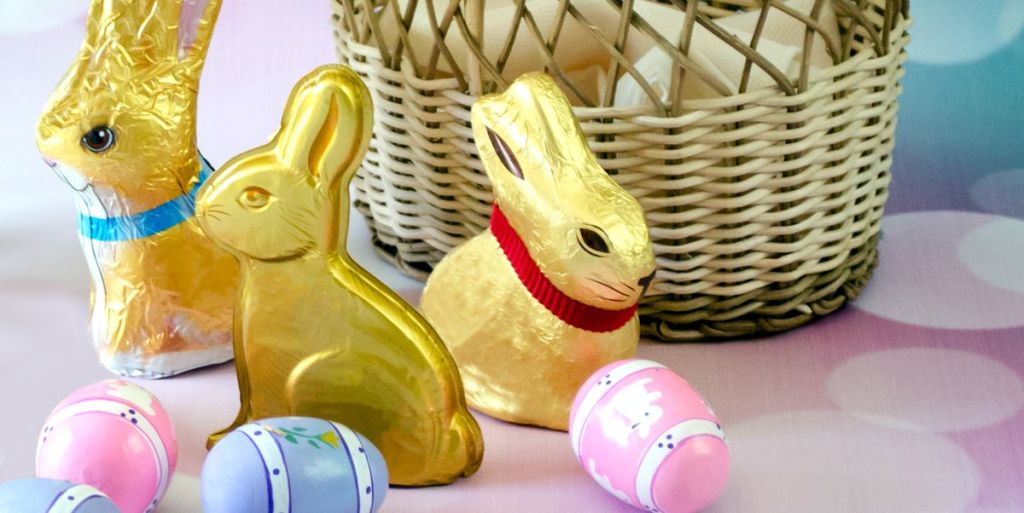
Chocolate Easter treats now come in all shapes and sizes.(ABC Radio Canberra: Penny Travers)
Commercialization during the 19th century saw rabbits become a popular symbol of Easter with the growth of the greeting card industry.

“Postage services became affordable and people wanted to keep in touch with people,” Professor Cusack said.
“Card companies like Hallmark became big by launching images of cute little rabbits and Easter eggs on cards.”
The first edible Easter bunnies made from sugared pastry were made in Germany in the 19th century.

Big confectionery companies, like Cadbury in England, started manufacturing chocolate eggs.
“Chocolate that used to be something that’s bitter and drunk became something that was sweetened and turned into a confectionery treat,” Professor Cusack said.

“Easter eggs were one of the areas of marketing for chocolate.”
Today, chocolate eggs and egg hunts are a popular part of Easter celebrations around the world”. (ABC)
The above article was taken from;
Origin of Easter: From pagan festivals and Christianity to bunnies and chocolate eggs
/ By Penny Travers
Posted Fri 14 Apr 2017 at 6:30pm https://www.abc.net.au/news/2017-04-15/the-origins-of-easter-from-pagan-roots-to-chocolate-eggs/8440134

I hope you have enjoyed the rich history of Easter and also discovering where some of the famous symbols and practices originated from. Please be sure to come back and read the other Posts dedicated to Easter and all that it brings. Thanks for reading!
 Angelika's World