

February 15, 2020 is the 46th day of the year 2020 in the Gregorian calendar. There are 320 days remaining until the end of the year. The day of the week is Saturday. But what makes this day so special? Keep reading to find out.

On this day in 1903 the 1st Teddy Bear was introduced to America. The Teddy Bear was made by Morris & Rose Michtom. Morris and Rose were inspired by an Article(Washington Post on Sunday, November 16, 1902) written about a Hunting trip that Theodore Roosevelt took. “Theodore Roosevelt was on a bear hunting trip near Onward, Mississippi on November 14, 1902. Mississippi’s Governor Andrew H. Longino had invited him, but unlike other hunters in the group, Theodore had not located a single bear.
Roosevelt’s assistants, led by Holt Collier, a born slave and former Confederate cavalryman, cornered and tied a black bear to a willow tree. They summoned Roosevelt and suggested that he shoot it. Viewing this as extremely unsportsmanlike, Roosevelt refused to shoot the bear. The news of this event spread quickly through newspaper articles across the country. The articles recounted the story of the president who refused to shoot a bear. However, it was not just any president, it was Theodore Roosevelt the big game hunter! Clifford Berryman, a political cartoonist, read the article and decided to lightheartedly satirize the president’s refusal to shoot the bear. Berryman’s cartoon appeared in the Washington Post on November 16, 1902.
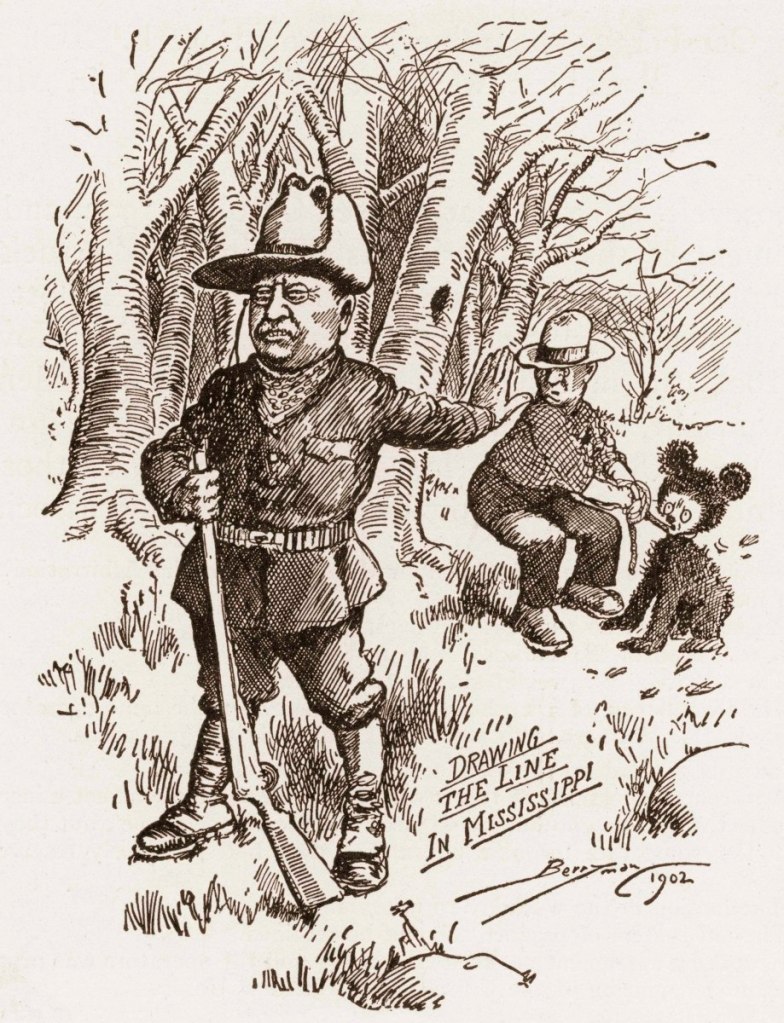
Morris Michtom, a Brooklyn candy shop owner, saw the cartoon and had an idea. He and his wife Rose also made stuffed animals, and Michtom decided to create a stuffed toy bear and dedicate it to the president who refused to shoot a bear. He called it ‘Teddy’s Bear‘. After receiving Roosevelt’s permission to use his name, Michtom mass produced the toy bears which were so popular that he soon founded the Ideal Toy Company. To this day the Teddy Bear has worldwide popularity and its origin can be traced back to Theodore’s fateful hunting trip in 1902” (National Park service).https://www.nps.gov/thrb/learn/historyculture/storyofteddybear.htm
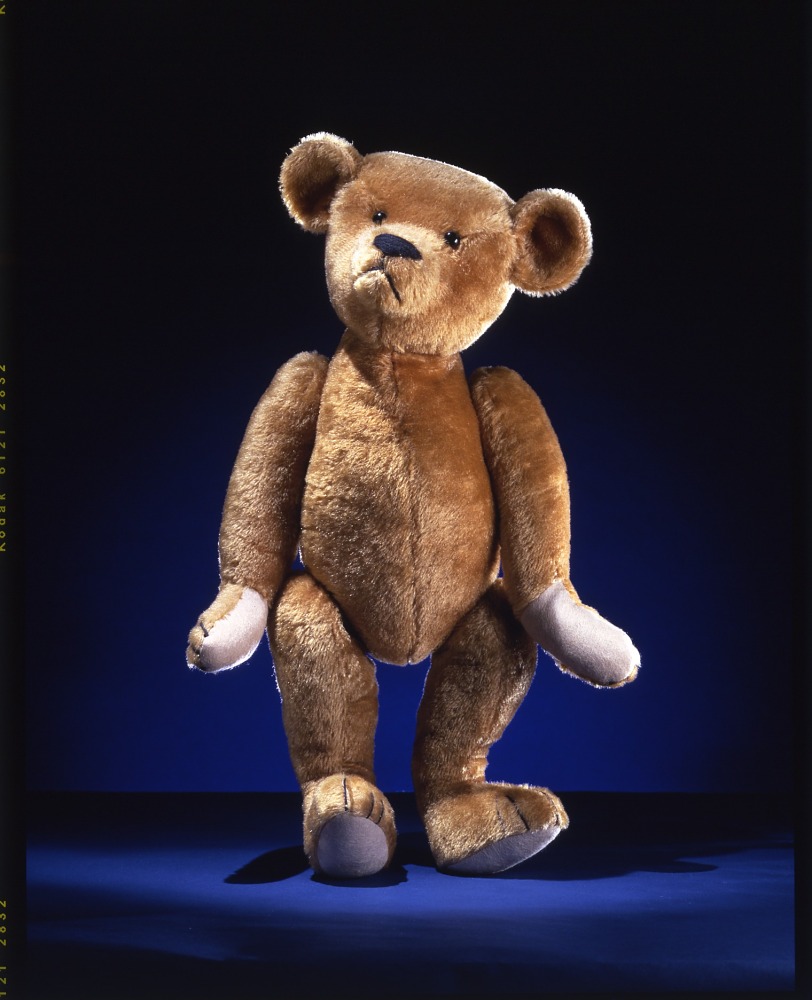
Stuffed animal. Teddy Bear. PL*252493.02. 
“Vintage Twenties Teddy Bear
Price: From 79 cents
Description This Teddy Bear is from an advert from 1920. Named after the United States President Theodore Roosevelt (whose nickname was “Teddy”) following a cartoon where he refused to kill a tied up beaten black bear (1902). The following year, Morris Michtom (Ideal Novelty and Toy Co) wrote to the president asking for permission to market a (Teddy Bear) and was given permission, the rest as they say is history. However, there are disputes over the first “Teddy Bear” as it is believed that the Steiff firm in Germany, unaware of Michtom’s bear, produced a stuffed bear from Richard Steiff’s designs at around the same time”(The People History). http://www.thepeoplehistory.com/20stoys.html
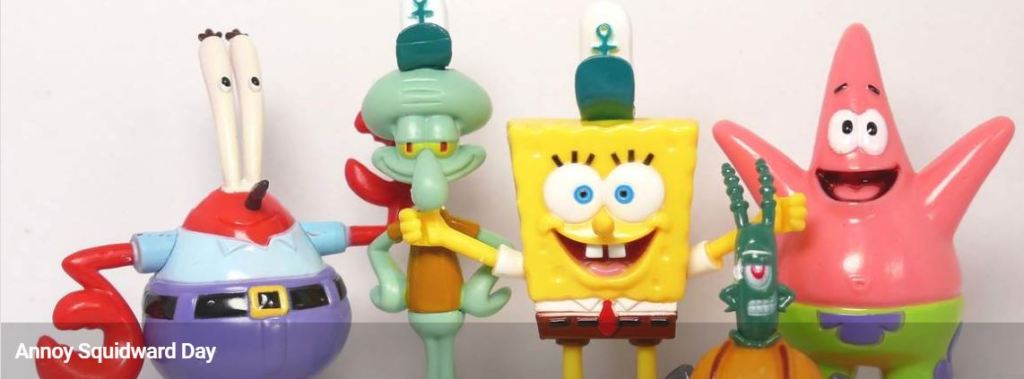
Annoy Squidward Day (Sponge Bob Square Pants)
Annoy Squidward Day is a holiday that is mentioned in the episode “Employee of the Month,” as part of a joke. It is first shown on a calendar and is marked with Squidward’s face. It is supposedly held annually on February 15. Squidward is bothered, so when he is asked what day it is today, he answers, “Annoy Squidward Day?” SpongeBob laughs and says that “Annoy Squidward Day” is on this day and points to the calendar. It is really the day Mr. Krabs announces the Employee of the Month Award.

If you would like to know what the worst things the group did to Squidward, Follow this link. https://screenrant.com/spongebob-squarepants-worst-things-gang-squidward/

National Gumdrop Day
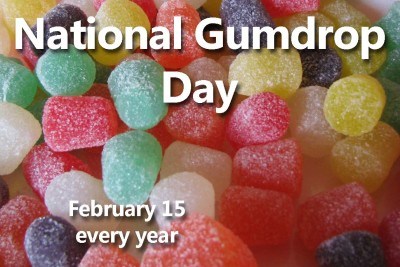
Today is National Gumdrop day. National Gumdrop Day is dedicated to a cone-shaped, gelatin-based candy, the gumdrop. They are fruit or spice flavored, and sugar coated.
Gumdrop Fun Facts
Coining of the phrase “Goody gumdrops” in the 1950s.
Gumdrop also came to be used as a slang term for sweetness or a sweetheart.
Originally, gumdrops were flavored with spices: orange(clove), yellow(allspice), red(cinnamon), green(spearmint), purple(anise), white (wintergreen or peppermint), and black(licorice).
The most popular gumdrop flavors are cherry, grape, orange, lemon, and spice flavors like clove, cinnamon, mint, and anise(licorice)
The NASA Apollo Command modules were nicknamed “Gumdrops” because of its conical shape. https://www.space.com/36240-apollo-9-lunar-module-test-flight-photos/2.html

The Command Module Gumdrop is hoisted aboard the U.S.S. Guadalcanal after the 10-day Apollo 9 mission in Earth orbit, 13 March 1969. Image credit: NASA.
On the fourth day of the 10-day Apollo 9 Earth-orbital mission, during an extravehicular activity, astronaut Russell L. Schweickart, lunar module pilot, uses a 70mm Hasselblad camera. The two modules — “Spider” and “Gumdrop” — are docked. Schweickart dons an Extravehicular Mobility Unit in “golden slippers” on Spider’s porch, with, only partially visible, a Portable Life Support System and an Oxygen Purge System on his back. During the EVA, Astronaut James A. McDivitt, Apollo 9 commander, waits inside the “Spider”. Astronaut David R. Scott, command module pilot, sits at “Gumdrops'” controls. http://spaceflighthistory.blogspot.com/2015/09/the-martian-adventure-gumdrops-on-mars.html


The classic board game, Candy Land, features both a Gumdrop Pass and a Gumdrop Mountain. https://www.toyhalloffame.org/toys/candy-land
Candy accounts for only 6% of the added sugar in the American diet. Soft drinks and juice account for 46%.

Branch’s Candy holds the world record for largest gumdrop which weighted in a little larger than 10 lbs. If you had eaten it, you would have consumed 15,127 calories.
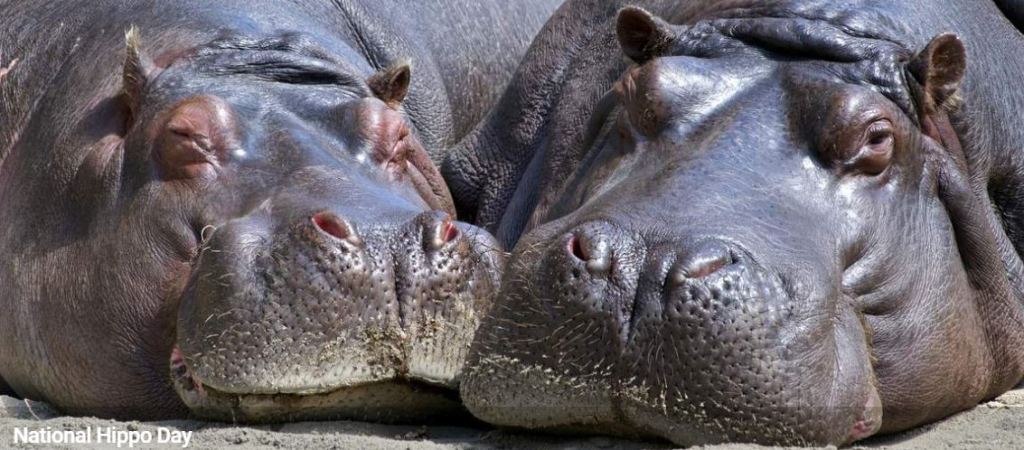
National Hippo Day
Hippopotamuses, known as hippos, are celebrated today.
Amazing Facts About the Hippopotamus
- The name Hippopotamus comes from the Ancient Greek ‘river horse’. http://wordcentral.com/cgi-bin/student?hippopotamus
- Hippos bask on the shoreline and secrete an oily red substance, which gave rise to the myth that they sweat blood. The liquid is a skin moistener and sunblock that may also provide protection against germs. https://www.nationalgeographic.com/animals/mammals/h/hippopotamus/
- An adult Hippo needs to resurface every 3 – 5 mins to breathe. The process of surfacing and breathing is automatic, and even a hippo sleeping underwater will rise and breathe without waking.
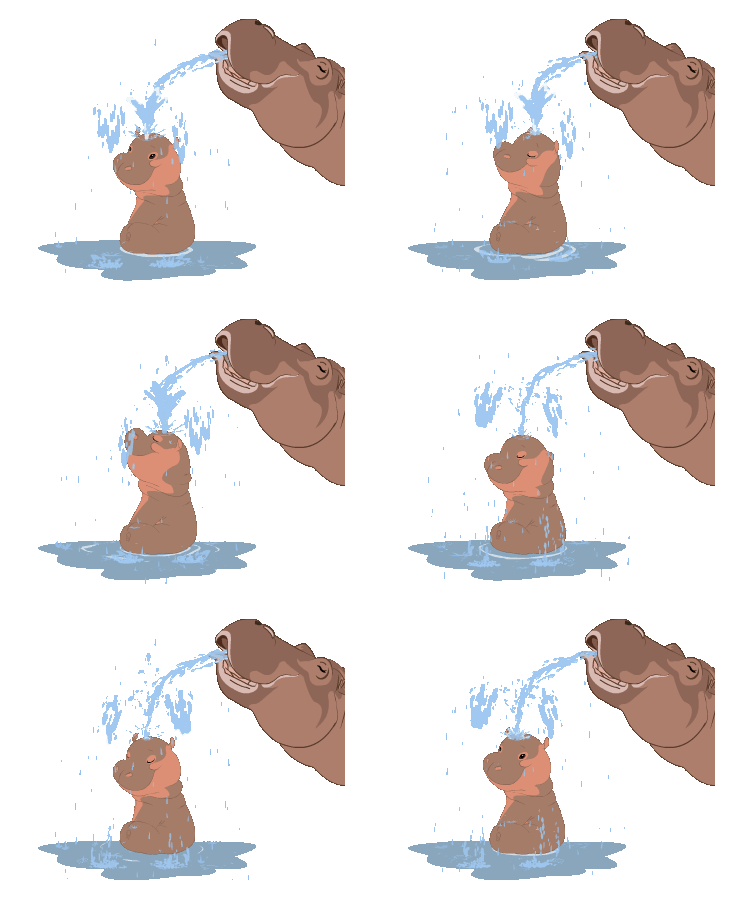
- They are only territorial while in the water. Both reproduction and birth occur in the water. Hippo calves weigh approximately 45 kg(99 pounds) at birth and can suckle on land or underwater by closing their ears and nostrils. Each female has only one calf every two years. Soon after birth, mother and young join schools that provide some protection against crocodiles, lions, and hyenas.
- Despite its stocky shape and short legs, it can easily outrun most humans. Hippos have been clocked at 30 km/h (18 miles per hour) over short distances.
- Hippos will travel on land for up to 10km (6 miles) to feed. They spend four to five hours grazing and can consume 68 kg (149 pounds) of grass each night. Considering their enormous size, a hippo’s food intake is relatively low.
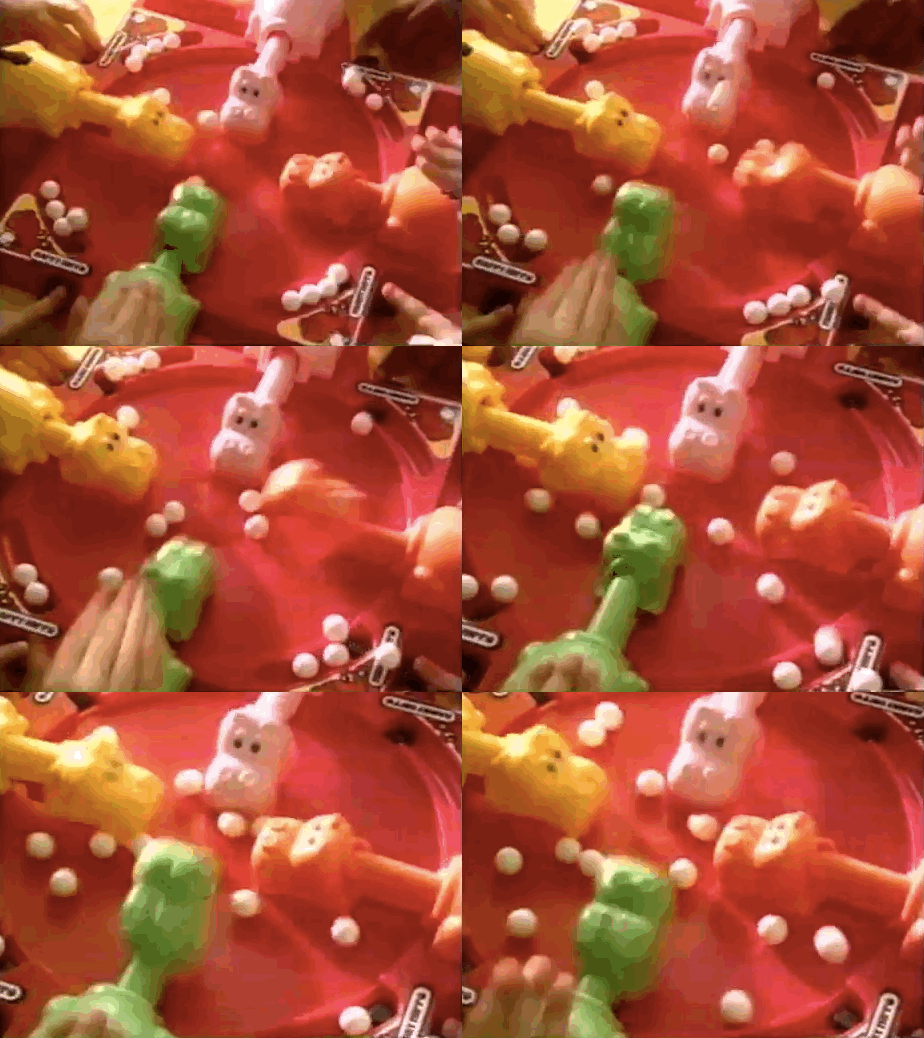
- The hippopotamus is one of the most aggressive creatures in the world and is often regarded as one of the most dangerous animals in Africa. However, if threatened on land it will often run for water.
- Their closest living relatives are cetaceans (whales, porpoises, etc.) from which they diverged about 55 million years ago.
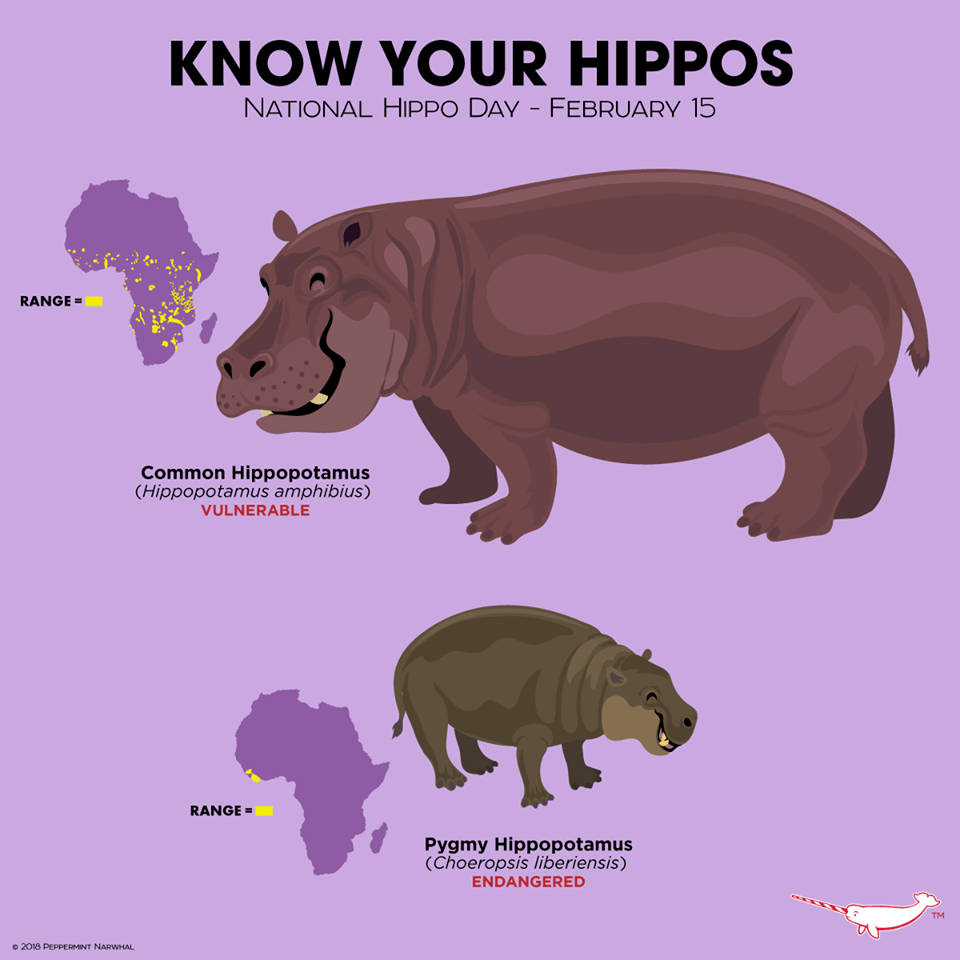
- The IUCN classified the Hippo as having vulnerable status in 2008. The population is in decline; most dramatically in the Democratic Republic of the Congo.
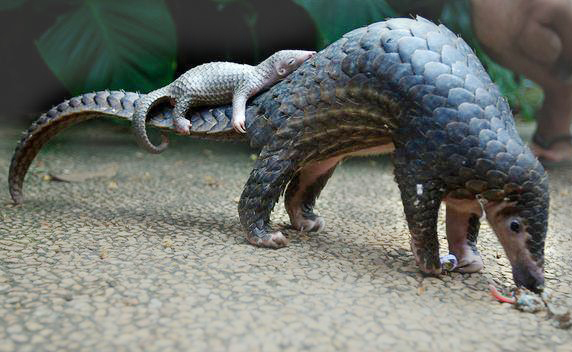
World Pangolin Day
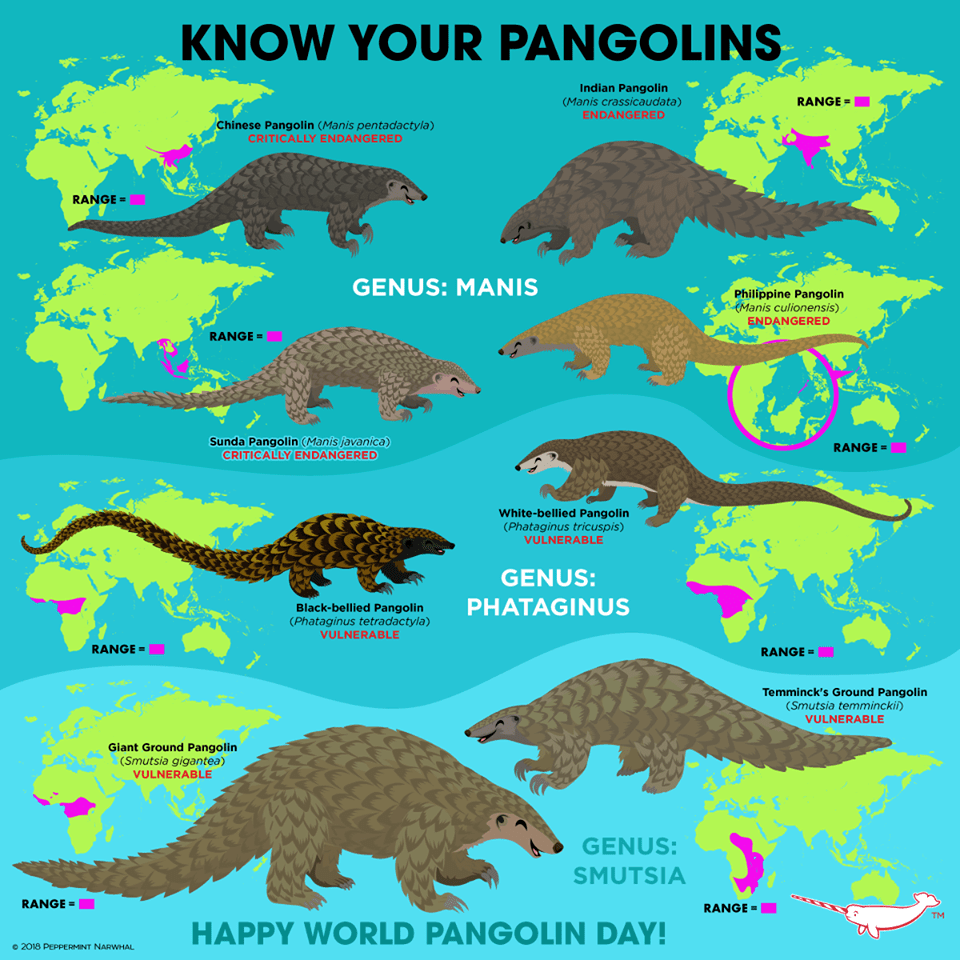
What is a pangolin?
Though many think of them as reptiles, pangolins are actually mammals. They are the only mammals wholly-covered in scales and they use those scales to protect themselves from predators in the wild. If under threat, a pangolin will immediately curl into a tight ball and will use their sharp-scaled tails to defend themselves.
2. What do pangolins eat?
Pangolins eat ants, termites and larvae and are often known as “the scaly anteater.” Because they have no teeth, pangolins pick up food with their sticky tongues, which can sometimes reach lengths greater than the animal’s body.
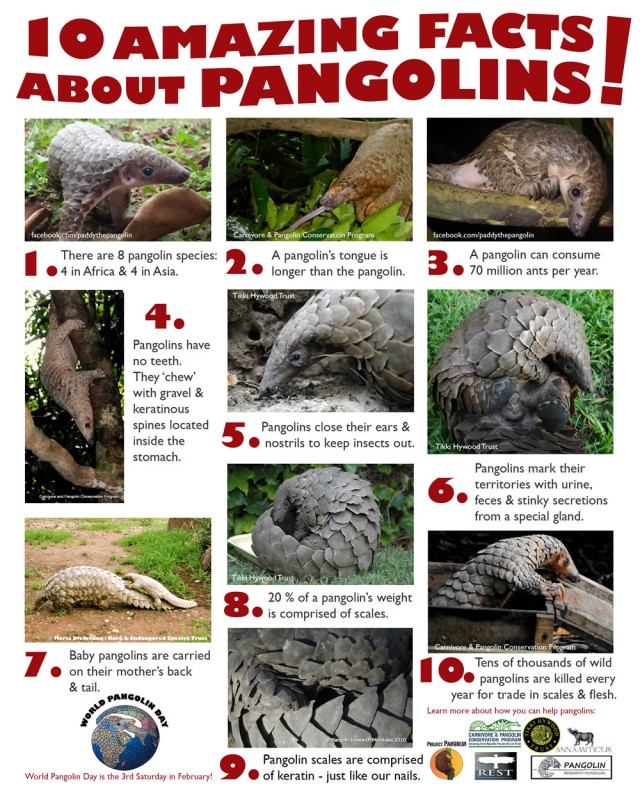
3. The most trafficked mammal in the world?
They certainly are one of the most trafficked mammals in Asia and, increasingly, Africa. Pangolins are in high demand in countries like China and Vietnam. Their meat is considered a delicacy and pangolin scales are used in traditional medicine and folk remedies. All eight pangolin species are protected under national and international laws. But there is still growing international illegal trade in pangolins.
Based on reported seizures between 2011 and 2013, an estimated 116,990-233,980 pangolins were killed, which represents only the tip of the trade. Experts believe that seizures represent as little as 10 percent of the actual volume in pangolins in illegal wildlife trade.
4. Is there any good news for pangolins?
Yes! In 2016, a treaty of over 180 governments announced an agreement that would end all legal trade of pangolins and further protect the species from extinction. However, illegal trade of the species continues. WWF, together with TRAFFIC, works to protect species from wildlife crime. In Asia, we work to reduce consumer demand for illegal wildlife products with campaigns and partnerships with governments and businesses.
5. What can I do to help pangolins?
Wildlife crime is the greatest threat to pangolin. You can help by Joining the “Stop wildlife Crime Campaign at the following website. https://support.worldwildlife.org/site/Advocacy?cmd=display&page=UserAction&id=664&_ga=2.202880209.131001997.1581715080-1559603849.1581715080
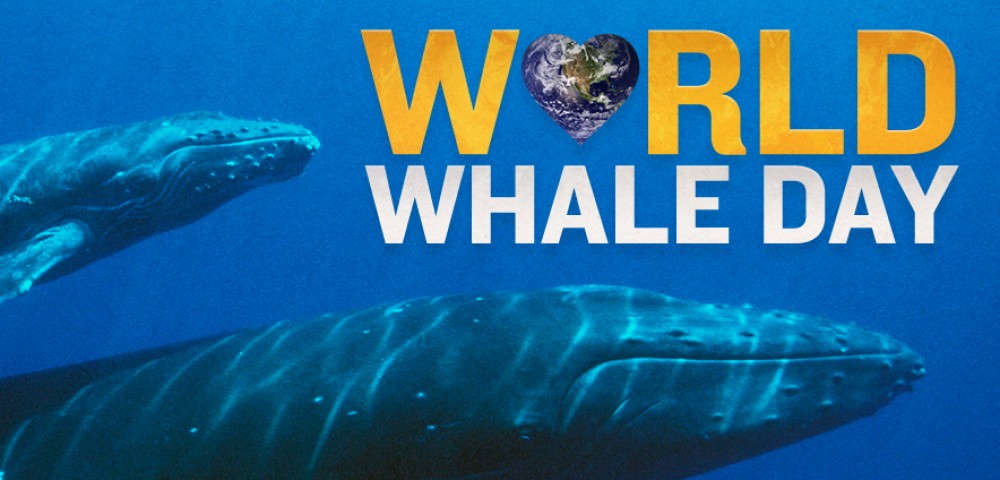
Whales are in the species known as, Cetacean. Cetacean (order Cetacea) is defined as; any member of an entirely aquatic group of mammals commonly known as whales, dolphins, and porpoises.
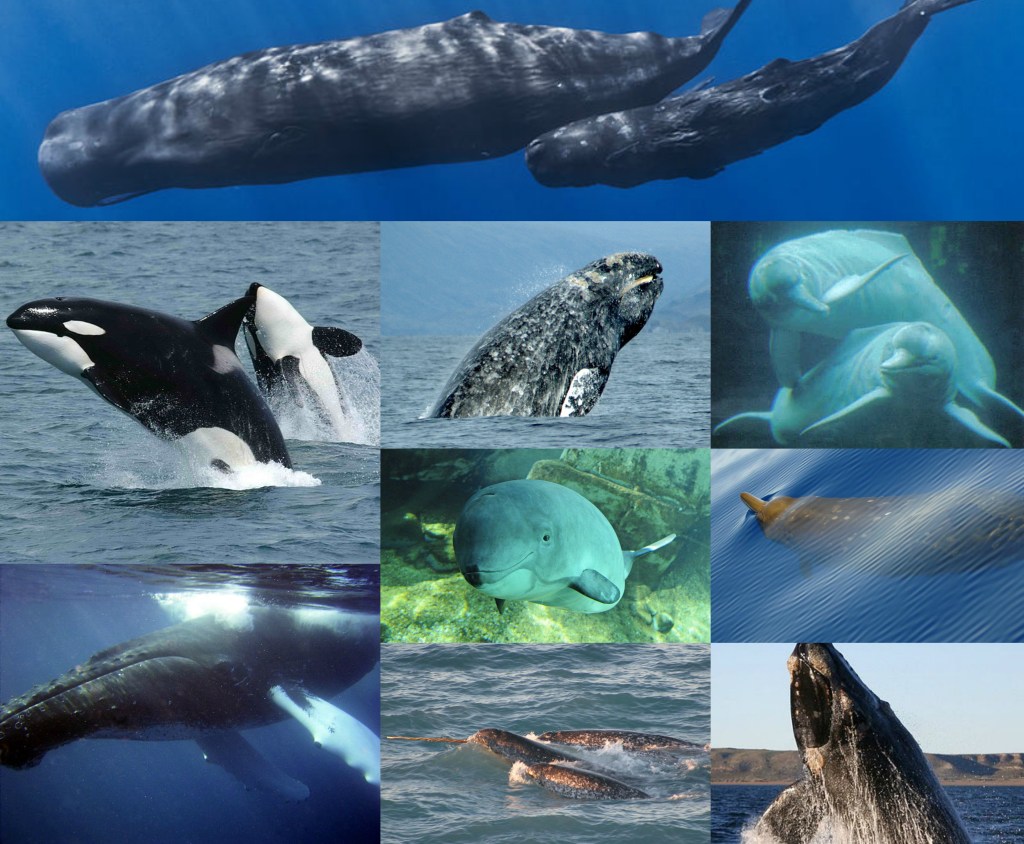
The ancient Greeks recognized that cetaceans breathe air, give birth to live young, produce milk, and have hair—all features of mammals. Because of their body form, however, cetaceans were commonly grouped with the fishes. Cetaceans are entirely carnivorous, although members of the order Sirenia (manatees, dugongs, and Steller’s sea cow) were once referred to as the “herbivorous Cetacea.” In the past cetaceans were important resources (see whaling), but by the end of the 20th century their economic importance was almost solely due to whale watching, a tourist activity and major source of income for certain coastal regions of many countries. https://www.britannica.com/animal/cetacean
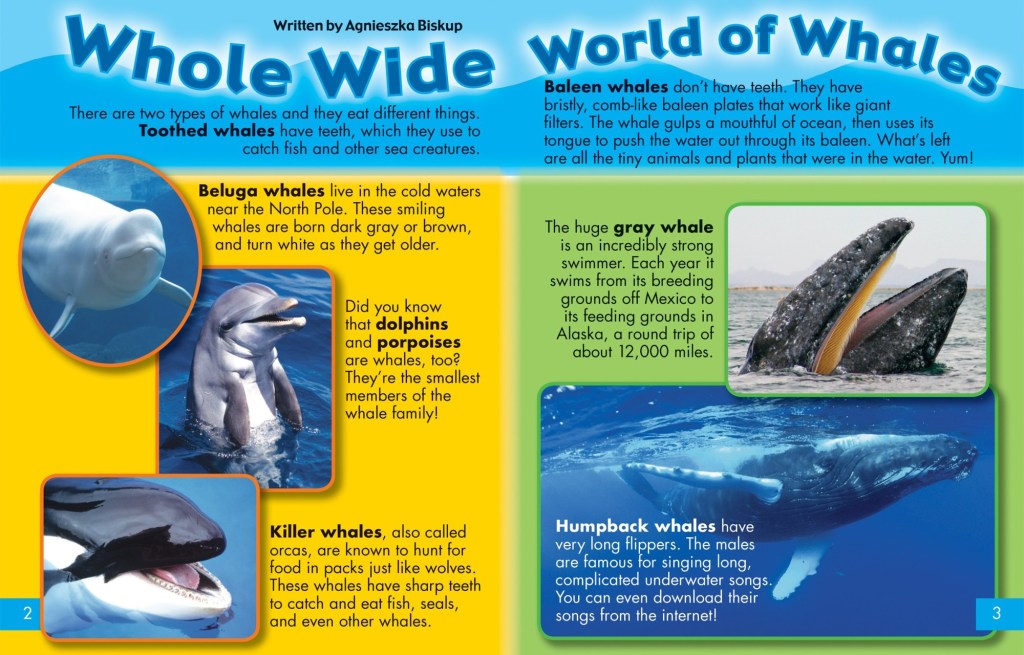
There are two types of whale; Baleen and Toothed. The key difference between them is the way they feed and what they have inside their mouth.
Baleen whales have baleen plates, or sheets, which sieve prey from seawater. Toothed whales have teeth and they actively hunt fish, squid and other sea creatures. Dolphins and porpoises all have teeth and rather confusingly are known as ‘toothed whales’ too!
Another obvious difference between baleen and toothed whales is the number of blowholes on top of their head; baleen whales have two whereas toothed whales have one. There are only 14 baleen whale species and they are generally larger than the 76 species of toothed whales – except for the mighty sperm whale, the largest toothed whale.
You can help these beautiful creatures by adopting ($50.00) or donating. https://adopt-us.whales.org/whale-adoption-project/

Wow! Today has a lot of Significance! I hope you have learned just as mush as I have. If you enjoyed this post, please like/Share/Subscribe.

 Angelika's World