

Today we will be discussing November 3rd Holidays. The two I have chosen are; Daylight Savings time and National Sandwich day. Hope they teach you something you didn’t know.
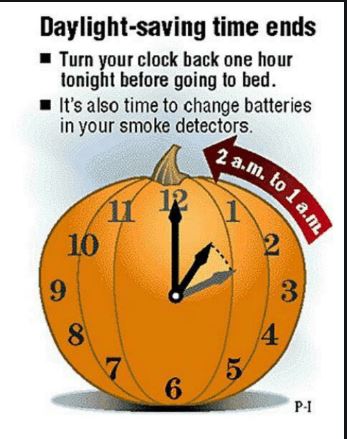
“Daylight saving time ends on Sunday, Nov. 3 at 2 a.m. — which is the official hour to set all of our clocks back to standard time. But most of us will probably “fall back” before we go to bed Saturday night. On the bright side, we gain an extra hour of sleep.
Not all States participate in Daylight saving Time. Presently, Hawaii and Arizona are the only two U.S. states that do not observe daylight saving time. Neither do the U.S. territories of Puerto Rico, Virgin Islands, Guam, American Samoa and Northern Marina Islands.
Daylight Saving Time is now used in over 70 countries worldwide and affects over one billion people every year. The beginning and end dates vary from one country to another” (USA Today).https://www.usatoday.com/news/
10 Things You Might Not Know About Daylight Saving Time
1. BENJAMIN FRANKLIN WAS HALF JOKING WHEN HE SUGGESTED IT.
More than a century before Daylight Saving Time (DST) was adopted by any major country, Benjamin Franklin proposed a similar concept in a satirical essay. In a piece called “An Economical Project for Diminishing the Cost of Light,” published in The Journal of Paris in 1784, he argued:
All the difficulty will be in the first two or three days; after which the reformation will be as natural and easy as the present irregularity […] Oblige a man to rise at four in the morning, and it is more than probable he will go willingly to bed at eight in the evening; and, having had eight hours sleep, he will rise more willingly at four in the morning following.
In one prophetic passage, he pitched the idea as a money-saver (though at the time people would have been conserving candle wax rather than electricity). To enforce the out-there plan, Franklin suggested taxing shutters, rationing candles, banning non-emergency coach travel after dark, and firing cannons at sunrise to rouse late-sleepers. While his essay clearly brought up some practical points, Franklin may have originally written it as an excuse to poke fun at the French for being lazy. He wrote that the amount of sunlight that goes wasted each morning would likely come as a shock to readers who “have never seen any signs of sunshine before noon.”
2. OFFICIAL CREDIT FOR THE IDEA GOES TO A BUG COLLECTOR.
The first serious case for DST came from a peculiar place. While working at a post office by day, an entomologist named George Vernon Hudson, who did most of his bug hunting at night, soon became frustrated by how early the sun set during the summer months. He reasoned that springing the clocks forward would allow more daylight for bug collecting—along with other evening activities. The clocks could be switched back in the winter when people (and bugs) were less likely to be found outdoors.
When the idea was proposed to a scientific society in New Zealand in 1895 it was panned for being pointless and overly complicated. Just two decades later, Daylight Saving Time would begin its spread across the developed world.
3. WWI PUSHED DAYLIGHT SAVING INTO LAW.
In 1916, Germany became the first country to officially adopt Daylight Saving Time. It was born out of an effort to conserve coal during World War I, and Britain, along with many other European nations, was quick to follow the Germans’ lead. It wasn’t until 1918 that the time change spread to the U.S. A year after entering the war, America began practicing DST as an electricity-saving measure. Most countries, including the U.S., ceased nationwide observation of the switch following wartime. Until, that is …
4. IT GAINED RENEWED POPULARITY DURING THE ENERGY CRISIS.
Although it was already being practiced in many states, the U.S. reconsidered nationwide DST in the 1970s, when, once again, the argument pivoted back to energy conservation. The oil embargo of 1973 had kicked off a nationwide energy crisis and the government was looking for ways to reduce public consumption. Year-round Daylight Saving Time was imposed in the beginning of 1974 to save energy in the winter months. Not everyone was enthusiastic about the change: Some of the harshest critics were parents suddenly forced to send their children to school before sunrise.
5. IT MAY ACTUALLY BE AN ENERGY WASTER.
Despite Daylight Saving Time’s origins as an energy saving strategy, research suggests it might actually be hurting the cause. One 2008 study conducted in Indiana found that the statewide implementation of DST two years earlier had boosted overall energy consumption by one percent. While it’s true that changing the clocks can save residents money on lighting, the cost of heating and air conditioning tends to go up. That extra hour of daylight is only beneficial when people are willing to go outside to enjoy it.
6. IT’S ALSO A HEALTH HAZARD.
Even if DST was good for your energy bill, that wouldn’t negate the adverse impact it can have on human health. Numerous studies show that the extra hour of sleep we lose by springing ahead can affect us in dangerous ways. An increased risk of heart attack, stroke, and susceptibility to illness have all been linked to the time change.
7. BUT THERE ARE SOME BENEFITS.
Though people love to complain about it, Daylight Saving Time isn’t all bad news. One notable benefit of the change is a decrease in crime. According to one study published in 2015, daily incidents of robbery dropped by seven percent following the start of DST in the spring. This number was heavily skewed by a 27 percent dip in robberies during the well-lit evening hours.
8. IT’S NOT OBSERVED NATIONWIDE.
DST has been widely accepted across the country, but it’s still not mandated by federal law. U.S. residents resistant to springing forward and falling back each year might consider moving to Arizona. The state isn’t exactly desperate for extra sunlight, so every spring they skip the time jump. This leaves the Navajo Nation, which does observe the change, in a peculiar situation. The reservation is fully located within Arizona, and the smaller Hopi reservation is fully located within the Navajo Nation. The Hopi ignores DST like the rest of Arizona, making the Navajo Nation a Daylight Saving doughnut of sorts, suspended one hour in the future for half the year.
9. IT STARTS AT 2 A.M. FOR A REASON.
Daylight Saving Time doesn’t begin at the stroke of midnight like you might expect it to. Rather, the time change is delayed until most people (hopefully) aren’t awake to notice it. By waiting until two in the morning to give or take an hour, the idea is that most workers with early shifts will still be in bed and most bars and restaurants will already be closed.
10. THE CANDY INDUSTRY LOBBIED FOR AN EXTENSION.
Until recently, losing an hour of daylight in the fall presented a problem for the candy industry. That’s because Daylight Saving Time traditionally ended on the last Sunday in October, a.k.a. before Halloween night. Intense lobbying to push back the date went on for decades. According to one report, candy lobbyists even went so far as to place tiny candy pumpkins on the seats of everyone in the Senate in 1986. A law extending DST into November finally went into effect in 2007”(Mental Floss).http://mentalfloss.com/article/93066/10-things-you-might-not-know-about-daylight-saving-time
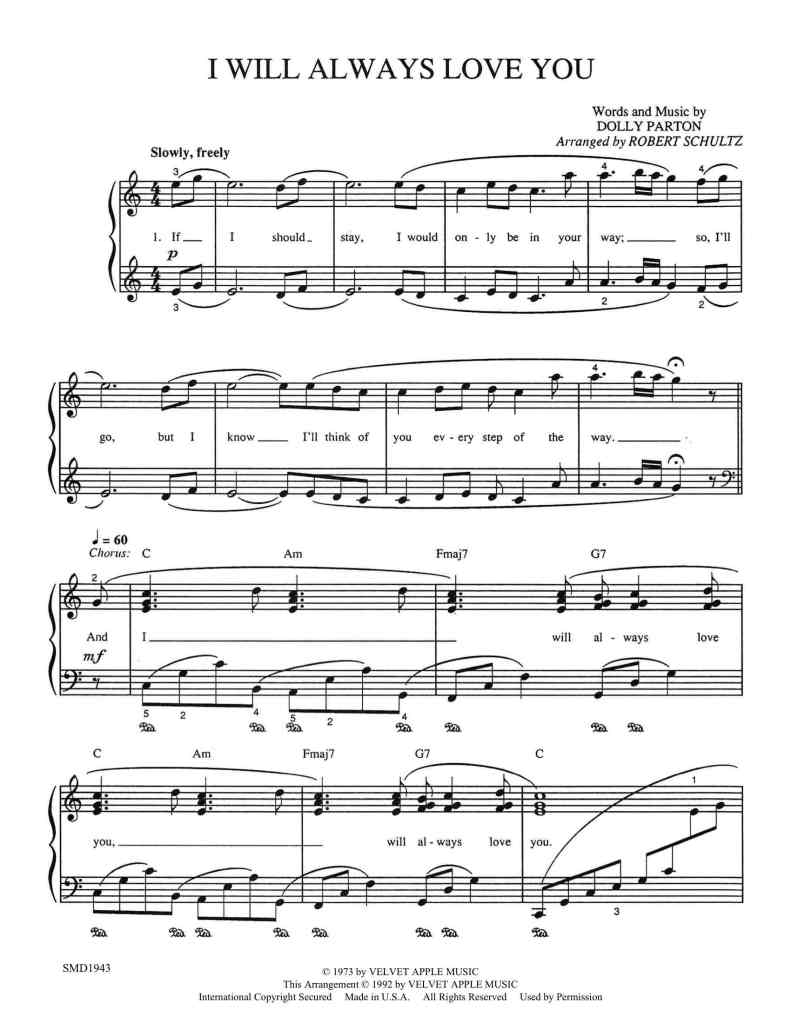
1992 “I Will Always Love You” (Dolly Parton cover) single released by Whitney Houston (Billboard Song of the Year 1993)

Did You Know?
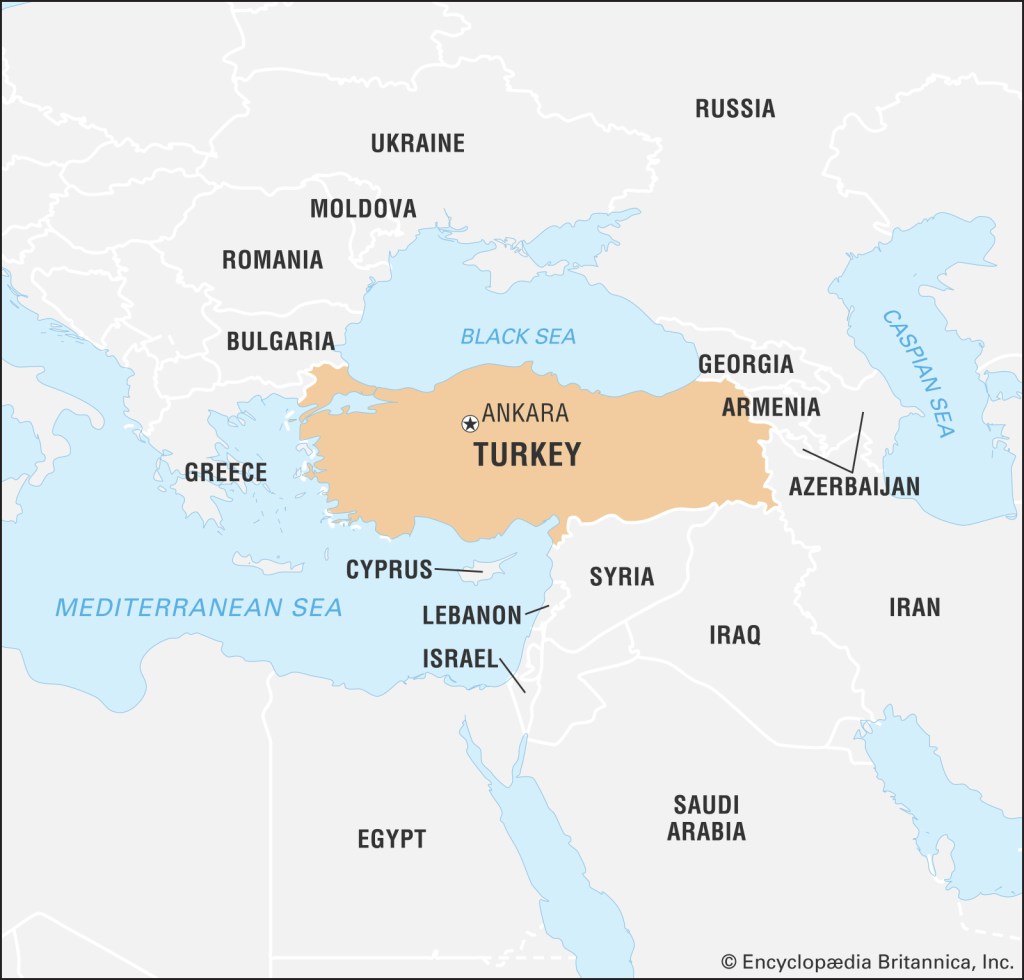
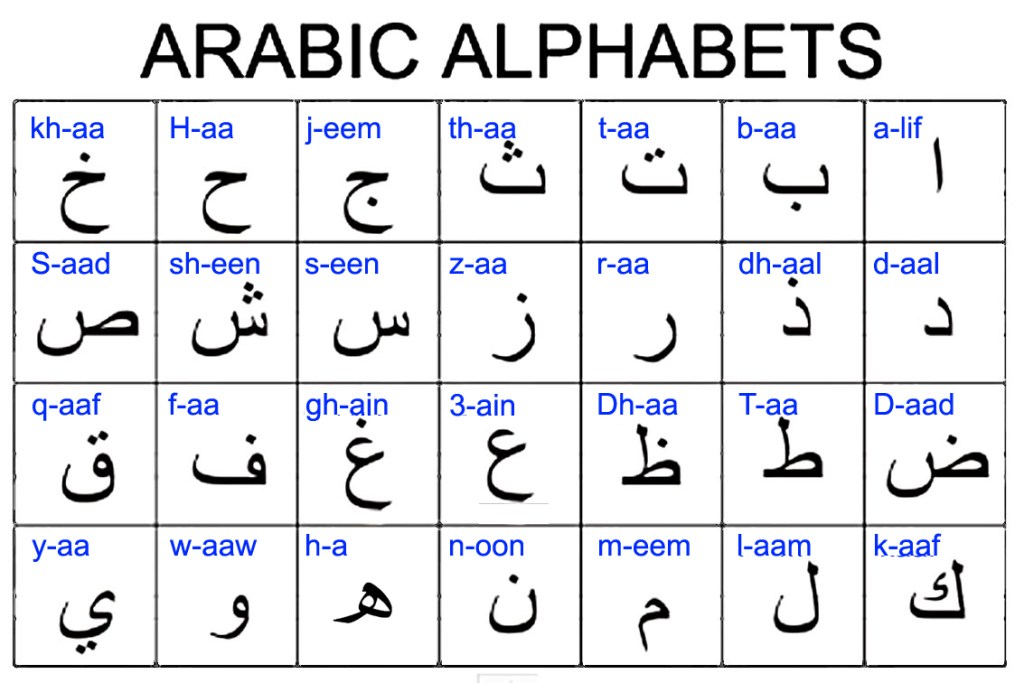
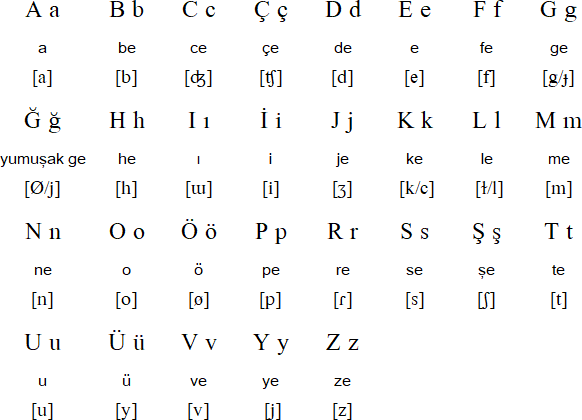
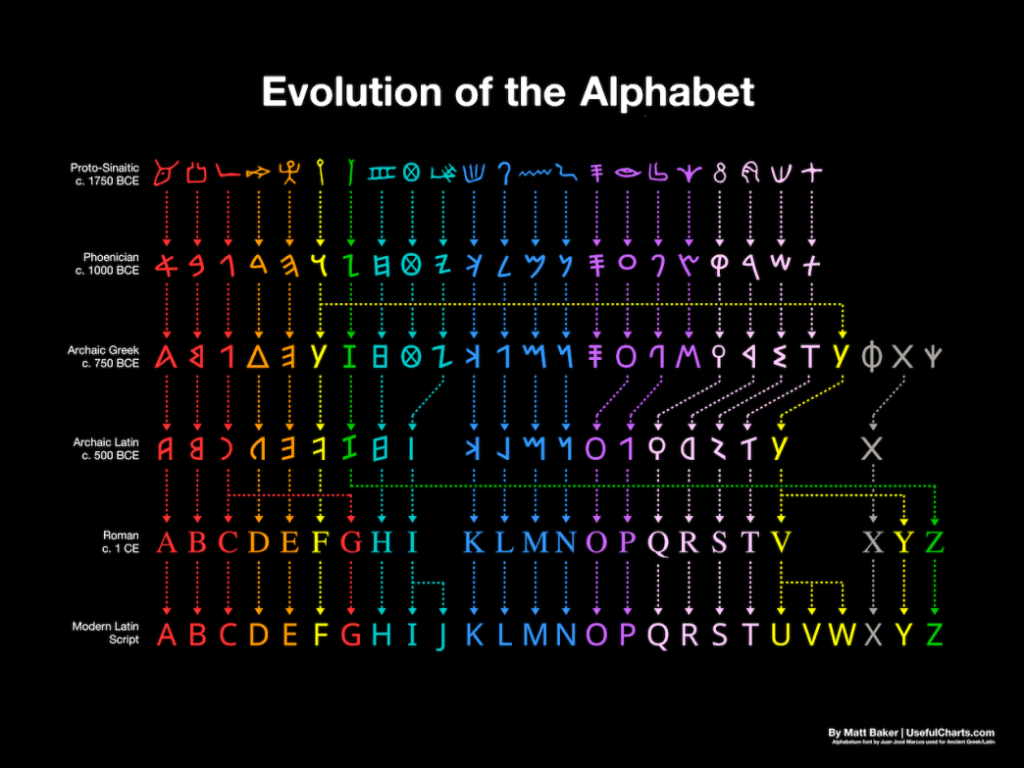
Turkey switched from Arabic to Roman alphabet On November 3, 1928
For more information click the link https://ottomanhistory.net/node/25
National Sandwich Day
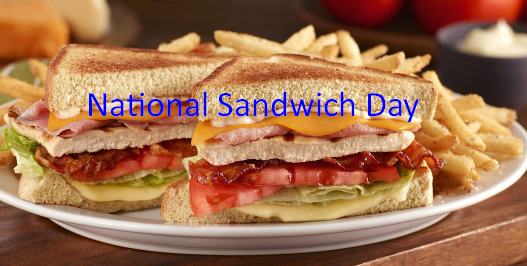
“The sandwich might be the perfect food: portable, open to any interpretation and as simple or as elaborate as the mood permits. The sandwich has a long history, but it hasn’t always been as embraced in America as it is now. It’s hard to imagine, but the sandwich was once thought of as a symbol of a colonial past that most patriotic Americans wanted to forget.

The sandwich as we know it was popularized in England in 1762 by John Montagu, the 4th Earl of Sandwich. Legend has it, and most food historians agree, that Montagu had a substantial gambling problem that led him to spend hours on end at the card table. During a particularly long binge, he asked the house cook to bring him something he could eat without getting up from his seat, and the sandwich was born. Montagu enjoyed his meat and bread so much that he ate it constantly, and as the concoction grew popular in London society circles it also took on the Earl’s name.
Of course, John Montagu (or rather, his nameless cook) was hardly the first person to think of putting fillings between slices of bread. In fact, we know exactly where Montagu first got the idea for his creation. Montagu traveled abroad to the Mediterranean, where Turkish and Greek mezze platters were served. Dips, cheeses, and meats were all “sandwiched” between and on layers of bread.
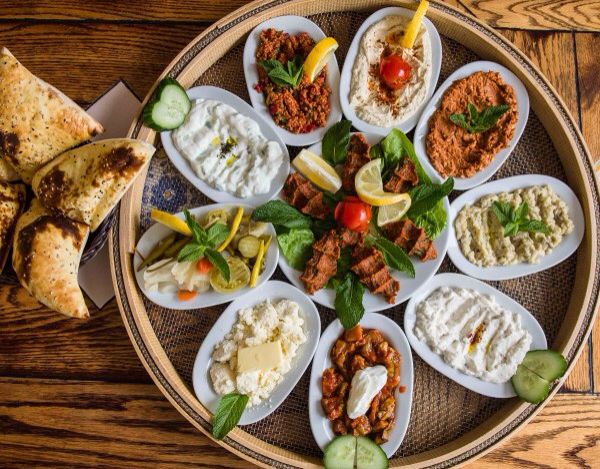
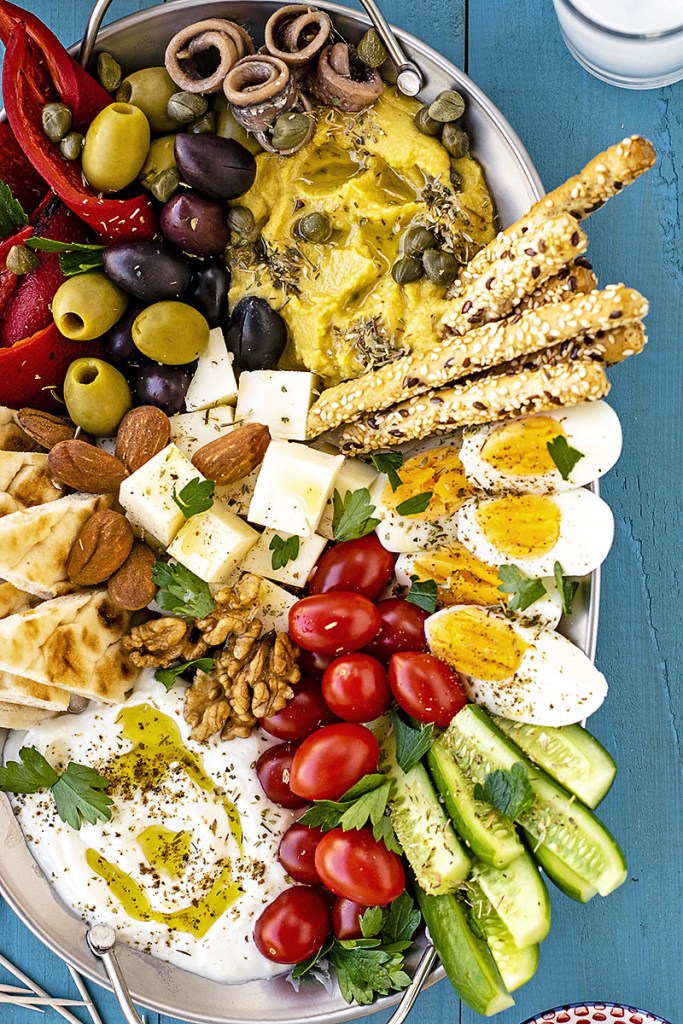
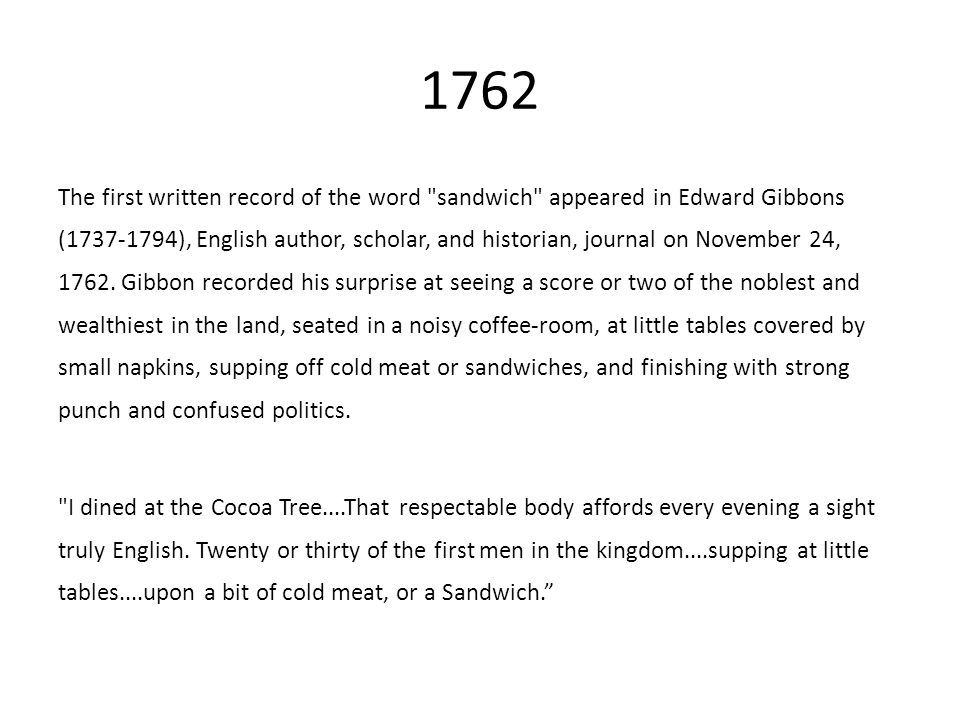
In all likelihood Montagu took inspiration from these when he sat at that card table. Montagu’s creation took off immediately. Just a few months later, a man named Edward Gibbon mentioned the sandwich by name in a diary entry, writing that he’d seen “twenty or thirty of the first men of the kingdom” in a restaurant eating them.

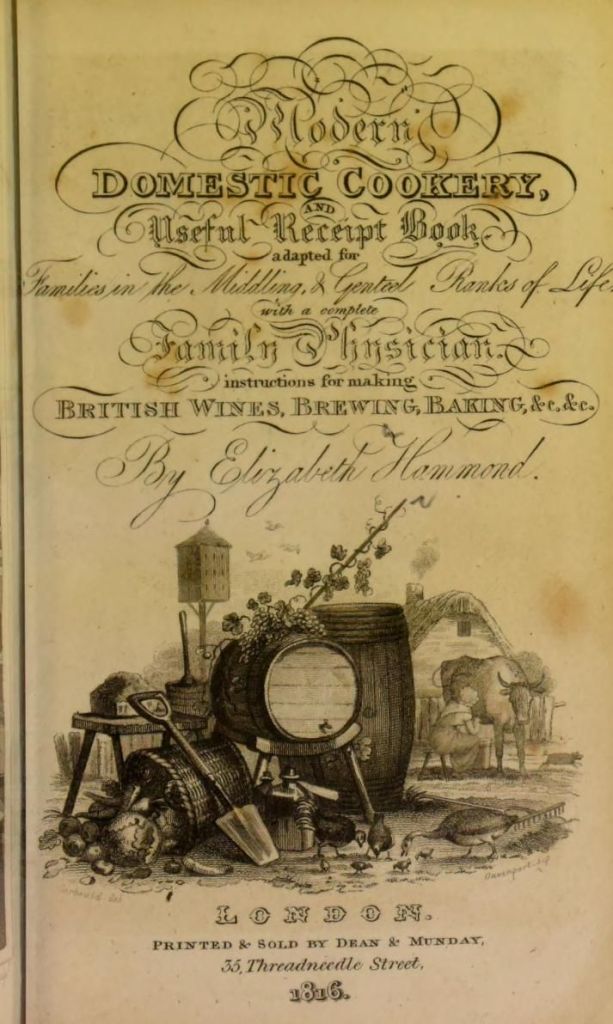
By the Revolutionary War, the sandwich was well established in England. You would expect American colonists to have taken to the sandwich as well, but there’s no early written record of them in the new country at all, until a sandwich recipe didn’t appear in an American cookbook until 1815.
Why would this creation go unsung in the nation for so long? It seems early American cooks tended to avoid culinary trends from their former ruling state. And the name “sandwich” itself comes from the British peerage system, something that most Americans wanted to forget. Once memory faded and the sandwich appeared, the most popular version wasn’t ham or turkey, but tongue! Of course, most Americans today wouldn’t dream of eating a tongue sandwich. But that’s ok, since we’ve come up with some pretty excellent sandwich ideas since then (History).
That iconic New Orleans sandwich, the Po’ Boy. The original Po’ Boy was filled with breaded fried oysters or shrimp. Common variations include soft shell crab, catfish and crawfish, spicy Louisiana sausage such as andouille, fried chicken and shredded seasoned beef (Fork and Plate). https://forknplate.com/2015/08/12/po-boy/##targetText=The%20original%20Po’%20Boy%20was,chicken%20and%20shredded%20seasoned%20beef.
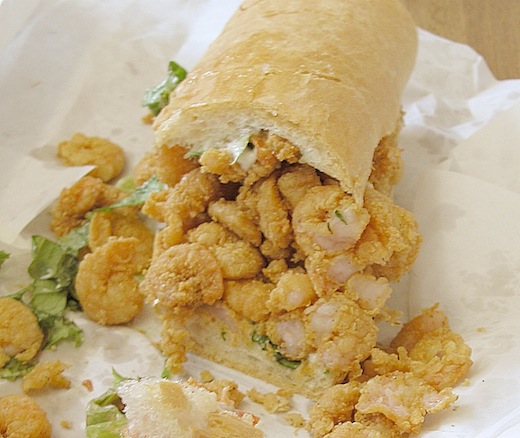
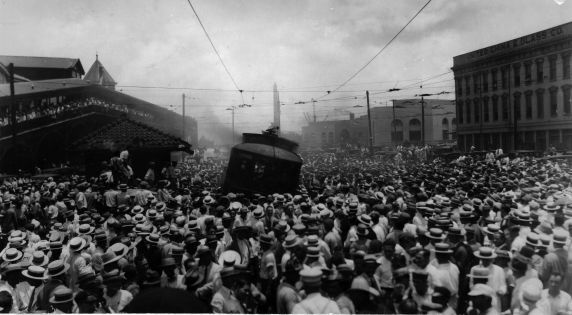
The Po Boy came about in the Great Depression during a streetcar worker strike. Two brothers, once streetcar operators themselves, owned a sandwich shop nearby, and promised to feed any down-on-his-luck striking worker for free.” Some 1,100 streetcar workers striked in New Orleans on July 1, 1929, spurring the creation of the po’ boy sandwich by local sandwich shop owners and one-time streetcar men. “Whenever we saw one of the striking men coming,” Bennie Martin later recalled, “one of us would say, ‘Here comes another poor boy.’” Martin and his brother Clovis fed any striker who showed up” (Peoples World).https://www.peoplesworld.org/article/today-in-labor-history-streetcar-strike-births-po-boy-sandwich/
How to make New Orleans Shrimp Po-boy

Butler, Stephanie. “The Story of the Sandwich.” History.com, A&E Television Networks, 18 July 2014, https://www.history.com/news/the-story-of-the-sandwich.
Waggoner, Susan, and Susan WaggonerI. “The Origin of the Po Boy Sandwich.” ForknPlate, 21 July 2015, https://forknplate.com/2015/08/12/po-boy/##targetText=The original Po’ Boy was,chicken and shredded seasoned beef.
“Ottoman History.” Why Did Ataturk Change the Language and the Alphabet of Modern Day Turkey? | Ottoman History, https://ottomanhistory.net/node/25.
“10 Things You Might Not Know About Daylight Saving Time.” Mental Floss, 11 Mar. 2018, http://mentalfloss.com/article/93066/10-things-you-might-not-know-about-daylight-saving-time.
“The Latest US and World News.” USA Today, Gannett Satellite Information Network, https://www.usatoday.com/news/.

I hope that you enjoyed what you read today. I know that I learned a great deal from researching for this post. Please feel free to Share this content and Subscribe if you feel Inclined to do so.
 Angelika's World